

Announcing the 2026 ASHE Award Recipients
ASHE Awards recognize exemplary achievements and contributions to the study of higher education through research, leadership, or service to ASHE and the field of higher education. The ASHE membership plays an essential role in identifying persons who should be honored by the Association.
The 2026 Awards Ceremony will be held on Wednesday, November 4, 2026 from 7:00pm-9:00pm San Juan Time during the 51st Annual Conference in San Juan. We look forward to gathering together for this ceremony to celebrate the higher education scholar community and this year’s selected award recipients. The Awards Ceremony is open to all conference attendees and registered guests.
A special thank you to members who submitted nominations as well as to the seven awards committees who reviewed nominations and made selections for this year.
Thank you to our Awards Ceremony Sponsor:
Thank you to our Dissertation of the Year Award Sponsor:
 Memoria (De)Colonial advances decolonial praxis and transforms higher education research by centering Puerto Rican realities, histories, and lived contexts. Through collaborative, heart-centered organizing, the project disrupts traditional ways of knowing, cultivates epistemic justice, and fosters deep community connection through care and labor. By expanding how scholars engage with local knowledge production, Memoria (De)Colonial offers a vital model for community-centered scholarship, lasting institutional impact, and collective liberation. Its transformative framework bridges activist praxis with rigorous inquiry to fundamentally reshape academic discourse, challenge oppressive institutional paradigms.
Join Memoria (De)Colonia for a (De)Tour and the Friday Morning Plenary Session.
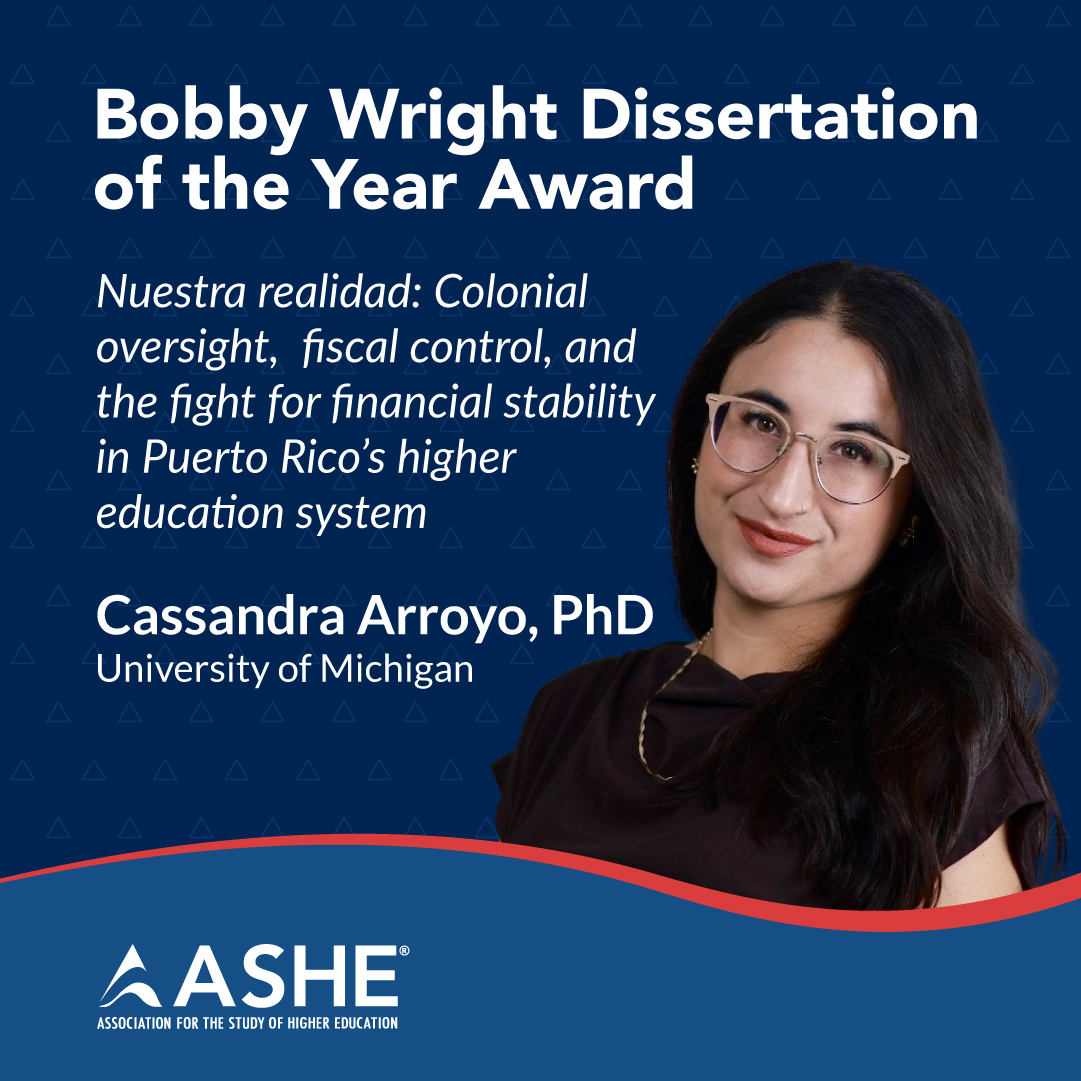 Dr. Cassandra Arroyo’s dissertation,Nuestra Realidad: Colonial Oversight, Fiscal Control, and the Fight for Financial Stability in Puerto Rico’s Higher Education System, reflects a focused research agenda, methodological sophistication, and field-advancing insights that bridge theory and practice. By examining how colonial governance, fiscal control, and austerity strain postsecondary institutions, this study delivers critical frameworks to dismantle systemic inequities and advance policy reform across higher education. Her rigorous investigation exposes the structural realities shaping institutional survival under economic pressure.
Join Dr. Arroyo for a presentation of their dissertation during the Annual Conference in San Juan.
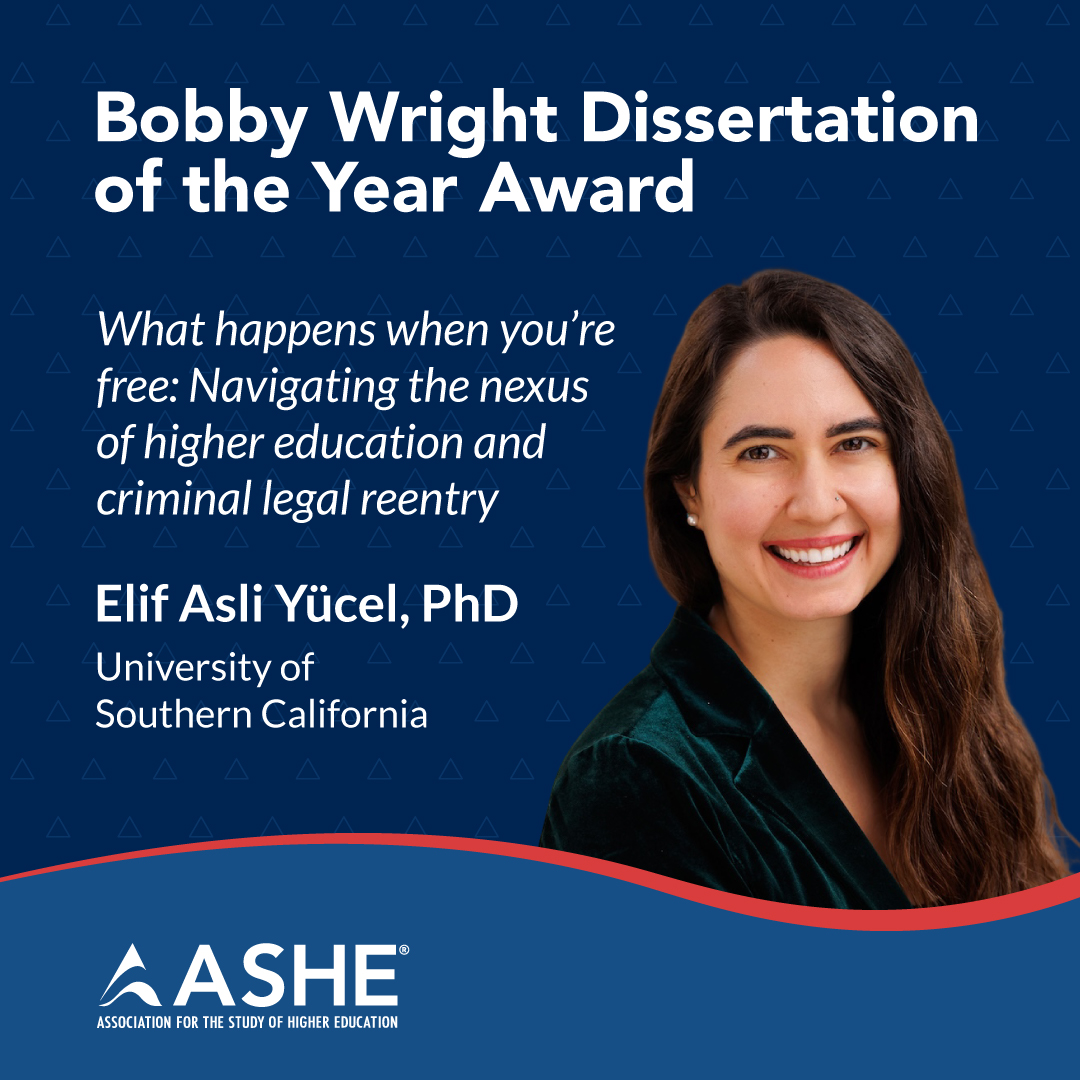 Dr. Elif Asli Yücel’s dissertation, What Happens When You're Free: Navigating the Nexus of Higher Education and Criminal Legal Reentry, demonstrates exemplary scholarship and a transformative approach to institutional reform. Through a rigorous, multi-level examination of community college reentry programs, this work illuminates how postsecondary systems can dismantle carceral barriers, empower system-impacted students, and build anti-carceral spaces that foster long-term educational equity. Her compelling research elevates student agency while challenging punitivist institutional practices, offering actionable strategies for building support for formerly incarcerated scholars.
Join Dr. Yücel for a presentation of their dissertation during the Annual Conference in San Juan.
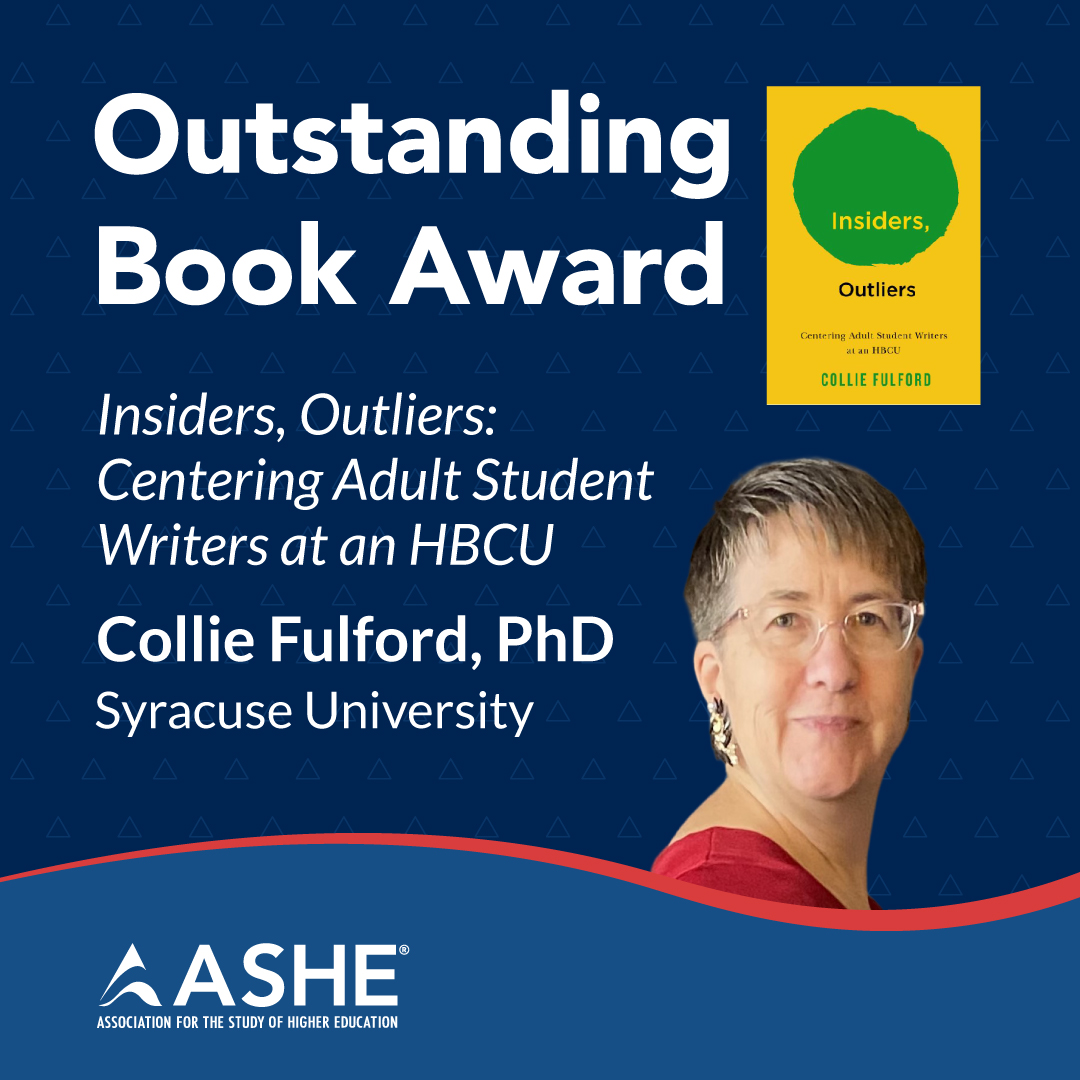 Dr. Collie Fulford’s book Insiders, Outliers: Centering Adult Student Writers at an HBCU bridges higher education and writing studies by centering the experiences, intellectual strengths, and writing lives of adult learners. Employing both traditional and rhizomatic methodologies, Dr. Fulford challenges ageist institutional norms, redefines traditional notions of persistence, and rejects rigid school-to-work paradigms. Her groundbreaking research highlights the workforce expertise adult students bring to academia, offering vital insights into institutional equity, pedagogy, and student success. By illuminating the complex narratives of adult writers, Dr. Fulford’s scholarship urges instructional practices to honor non-traditional pathways.
Join Dr. Fulford for a Fireside Chat during the Annual Conference in San Juan.
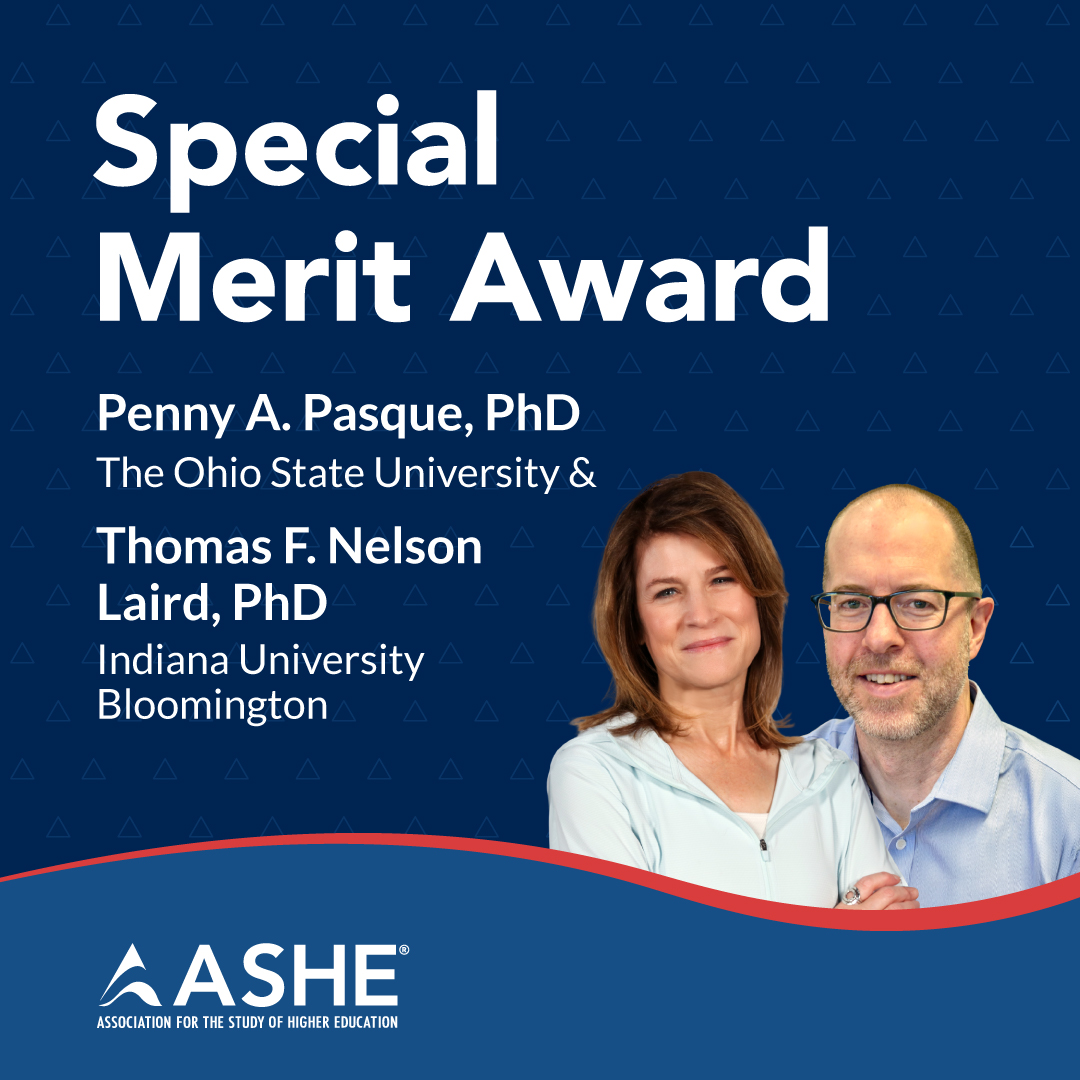 Drs. Penny Pasque and Thomas Nelson Laird transformed The Review of Higher Education through their visionary co-editorship, streamlining review processes and humanizing editorial feedback. They prioritized equity and inclusion across the editorial board, launched the Liberatory Possibilities and Praxis section, and significantly broadened global access. Their leadership elevated the journal’s scholarly reach and reputation, leaving an enduring mark on the landscape of higher education publishing. By modeling compassionate, rigorous editorial stewardship, Pasque and Nelson Laird cultivated an expansive community of researchers, broadening epistemological boundaries and establishing new standards for inclusive, impactful academic scholarship.
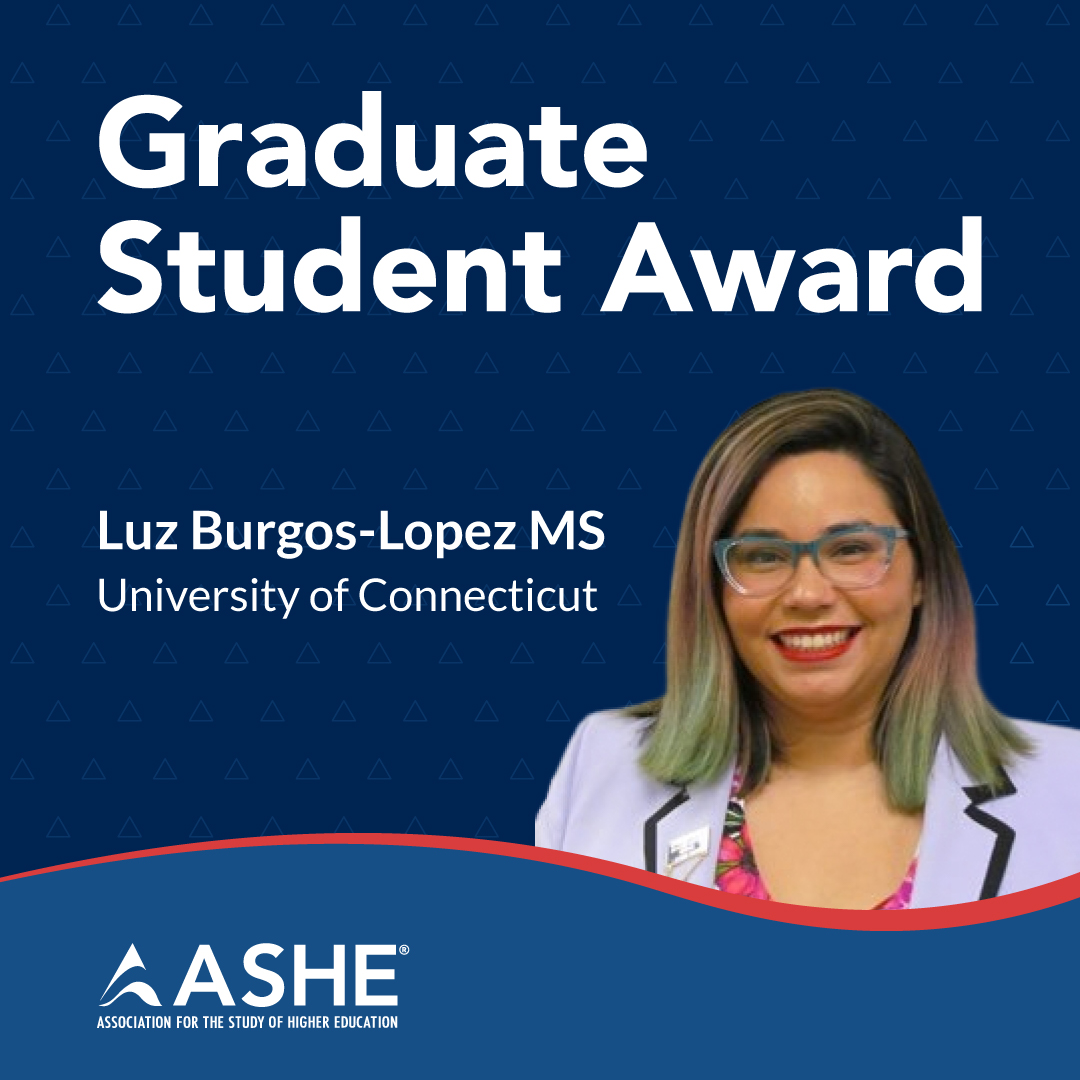 Luz Burgos-López’s scholarship disrupts settler-colonial racial logics and advances epistemic racial justice by examining how U.S. Caribbean Latinx scholars engage in epistemic disobedience to expand conceptualizations of Latinidad. Her research seamlessly integrates with her publications and presentations, while her dedicated national service and committee leadership demonstrate a profound commitment to equity, institutional transformation, and the future of higher education. Her service, including leadership roles with the ASHE Graduate Student Committee and the AAHHE Board, demonstrates a profound commitment to equity, institutional transformation, and the future of higher education.
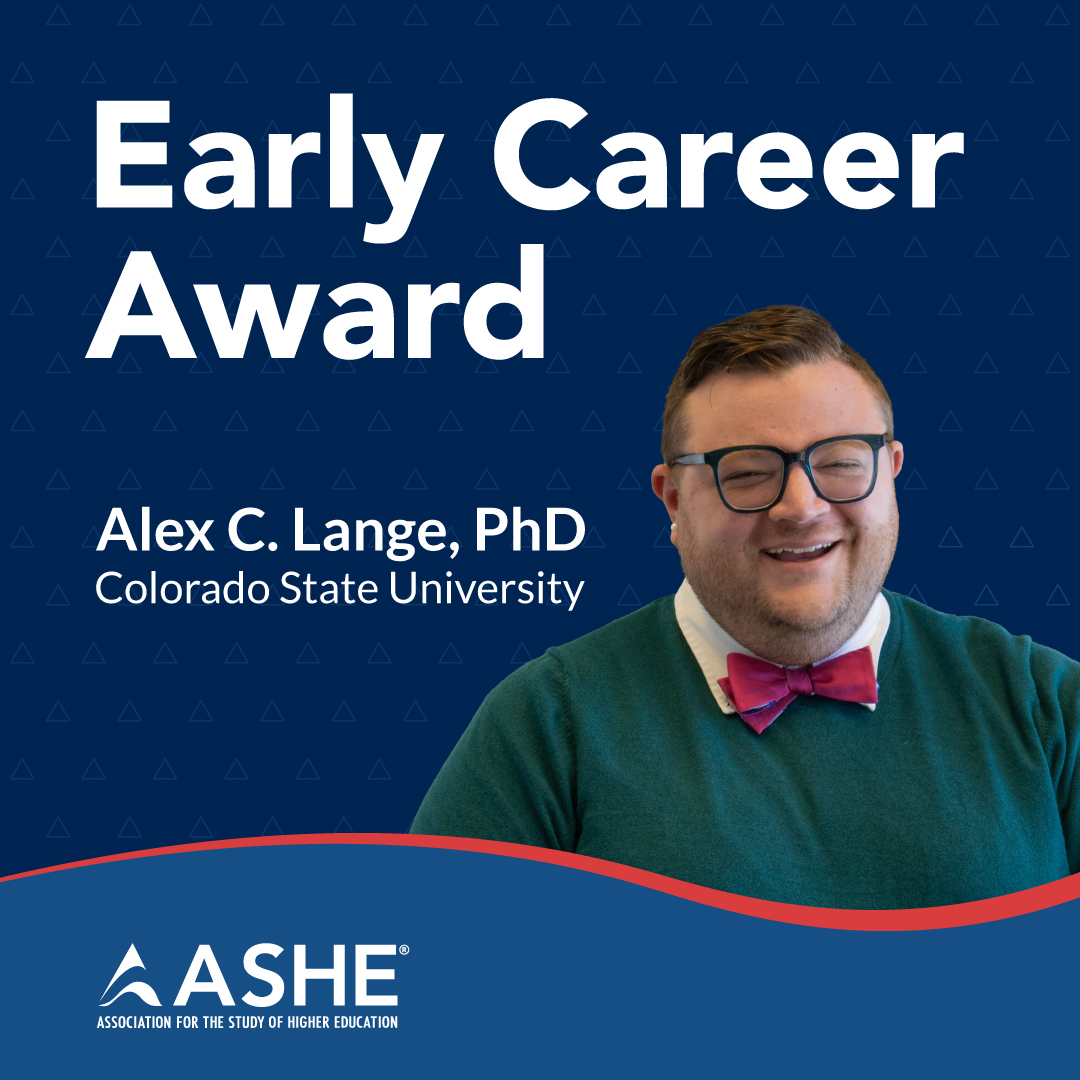 Dr. Alex C. Lange’s scholarship sits at the intersection of queer and trans studies in education, transforming student development theory by demonstrating how institutional power, policy, and material conditions shape LGBTQ+ student experiences. A prolific early-career scholar and grant-funded investigator, their research redefines developmental models and methodology while bridging theory and practice through public scholarship. Their dedicated professional service, including co-chairing the ASHE 2025 Conference Attendee Engagement Committee, further reflects an exceptional record of field-building leadership and advocacy for postsecondary equity. Dr. Lange’s work offers humanizing insights that guide educators, administrators, and researchers.
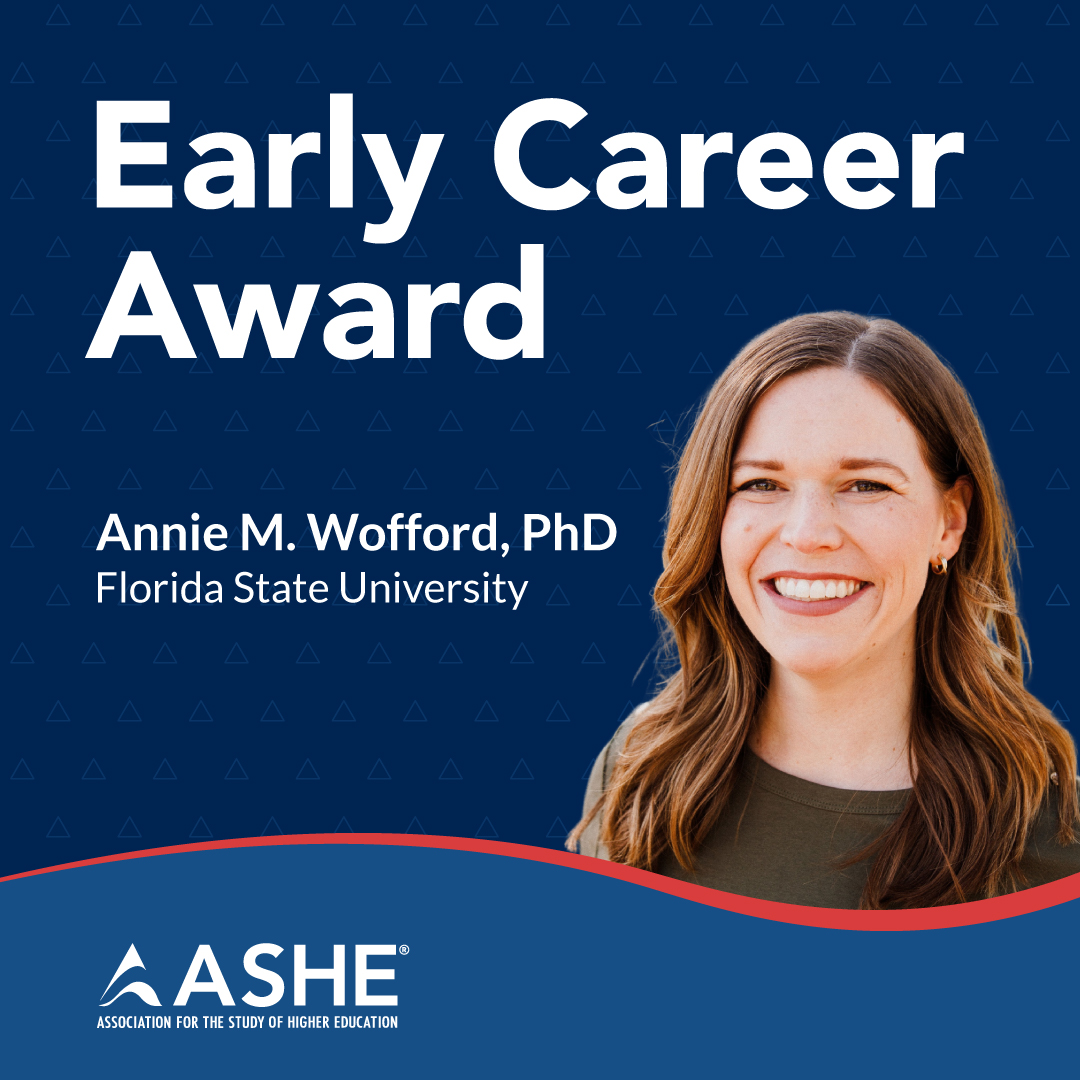 Dr. Annie Wofford’s scholarship examines structural inequities across STEM graduate pathways, undergraduate student success, and critical quantitative methodologies. Her research leverages longitudinal and mixed-methods approaches to generate asset-based frameworks, such as the funds of science identity model. Her extensive grant-funded work, high-volume publication record, and development of open-access equity-minded mentoring toolkits bridge research and practice, demonstrating exceptional early-career leadership and field impact. Dr. Wofford’s scholarship dismantles systemic barriers limiting minoritized scholars in technical disciplines, translating complex empirical findings into actionable mentoring resources that foster sustainable organizational change.
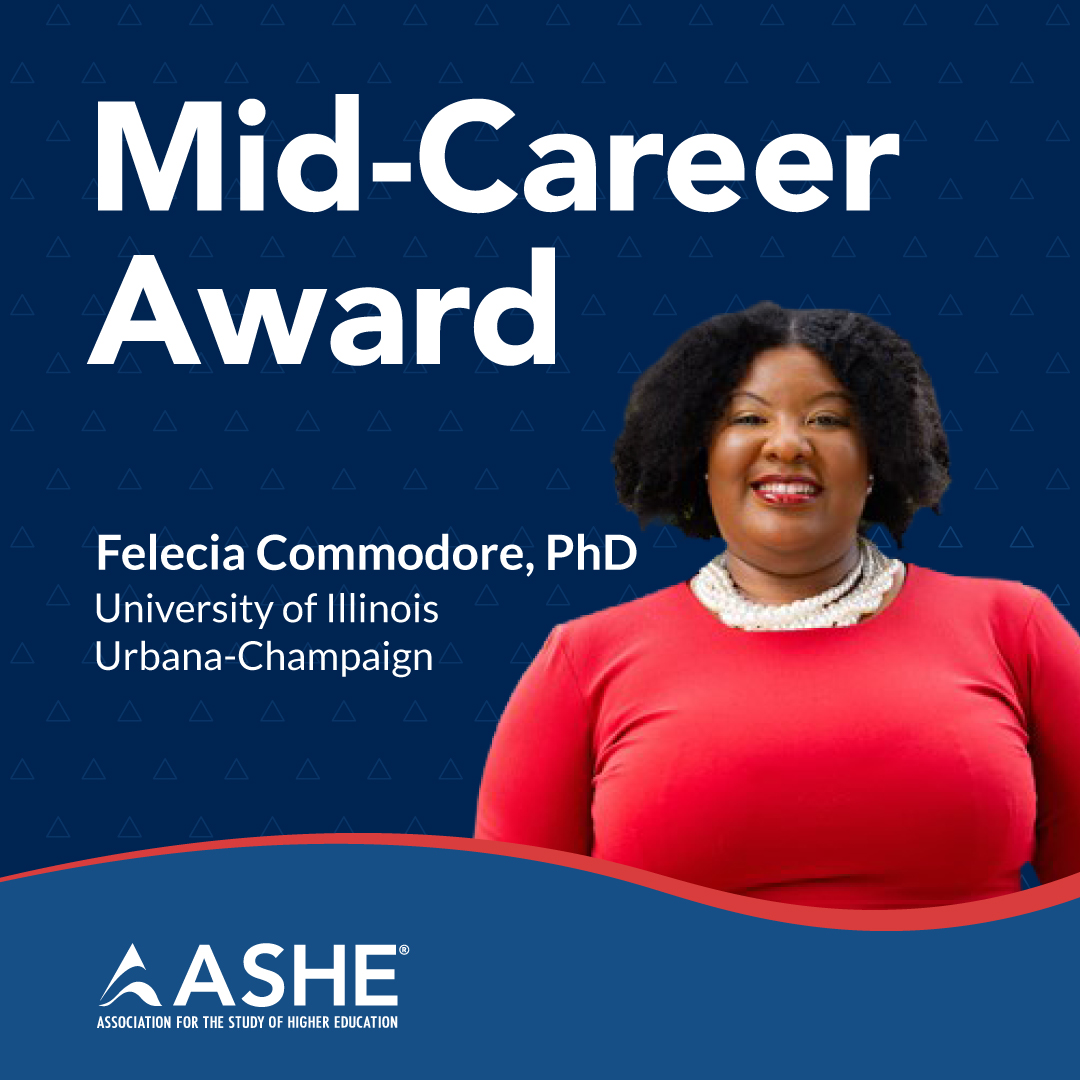 Dr. Felecia Commodore’s scholarship advances higher education research by critically examining governance, power dynamics, and leadership within Minority-Serving Institutions and Historically Black Colleges and Universities. She develops culturally responsive, intersectional frameworks that challenge deficit narratives and rethink traditional organizational paradigms. Her research translation, strategic public engagement, and field-building leadership directly inform policy, board governance, and systemic transformation, demonstrating a profound, sustained impact on the study and practice of leadership. Dr. Commodore has served in numerous leadership roles within ASHE, including on the Board of Directors and as co-host of the ASHE Presidential Podcast.
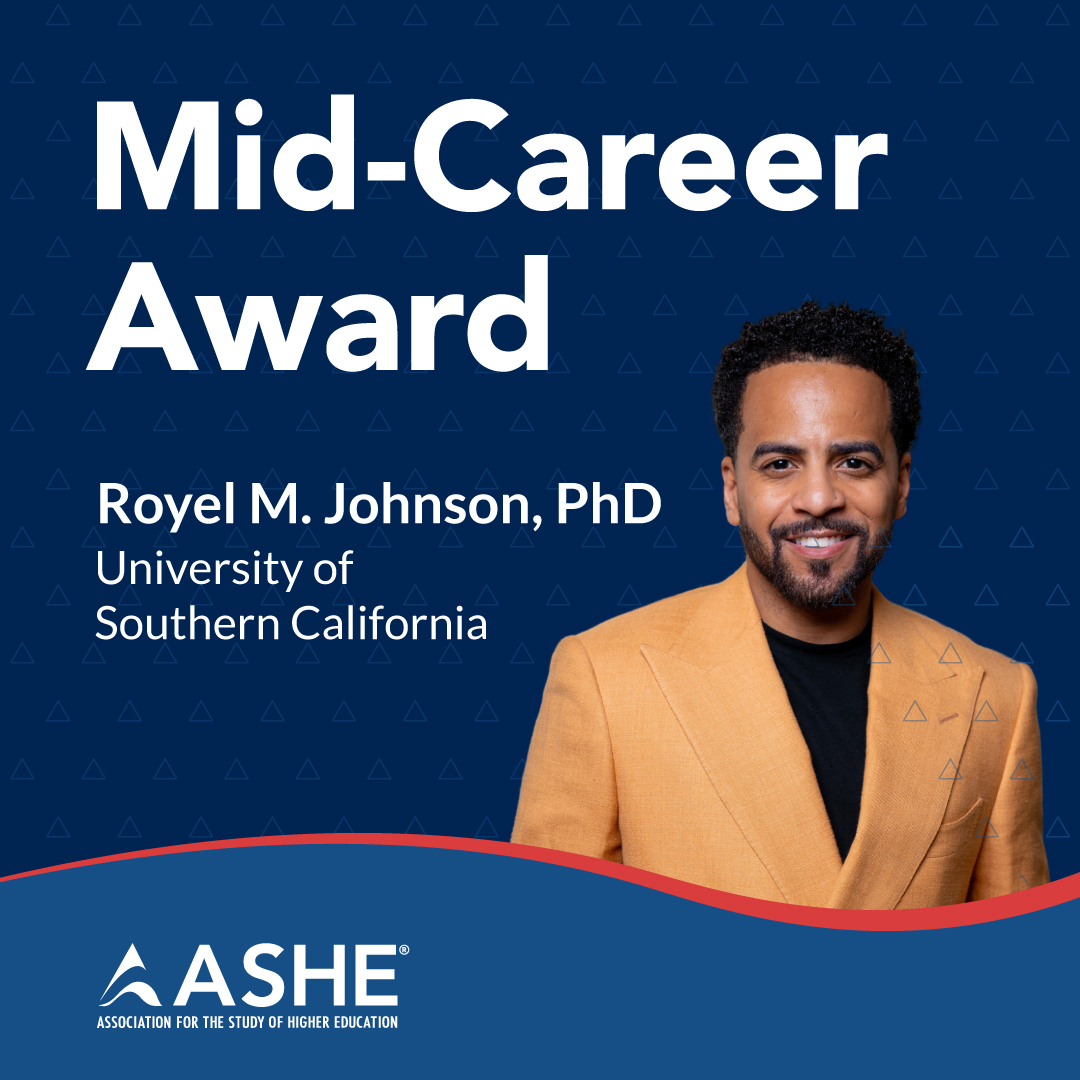 Dr. Royel M. Johnson’s scholarship reshapes how higher education examines belonging, system-impacted students, and the institutional conditions shaping racial equity. His research trajectory advances critical theoretical models, such as the college-to-prison nexus and the Intersectional Ecological Model of Belonging, while pioneering Critical Race Mixed Methodology. Through extensive publication, significant external funding, public scholarship, and leadership in field-shaping initiatives, Dr. Johnson’s rigorous and publicly consequential work demonstrates a profound, sustained impact on the field. Dr. Johnson co-hosted the ASHE Presidential Podcast and was recently appointed incoming editor of The Review of Higher Education.
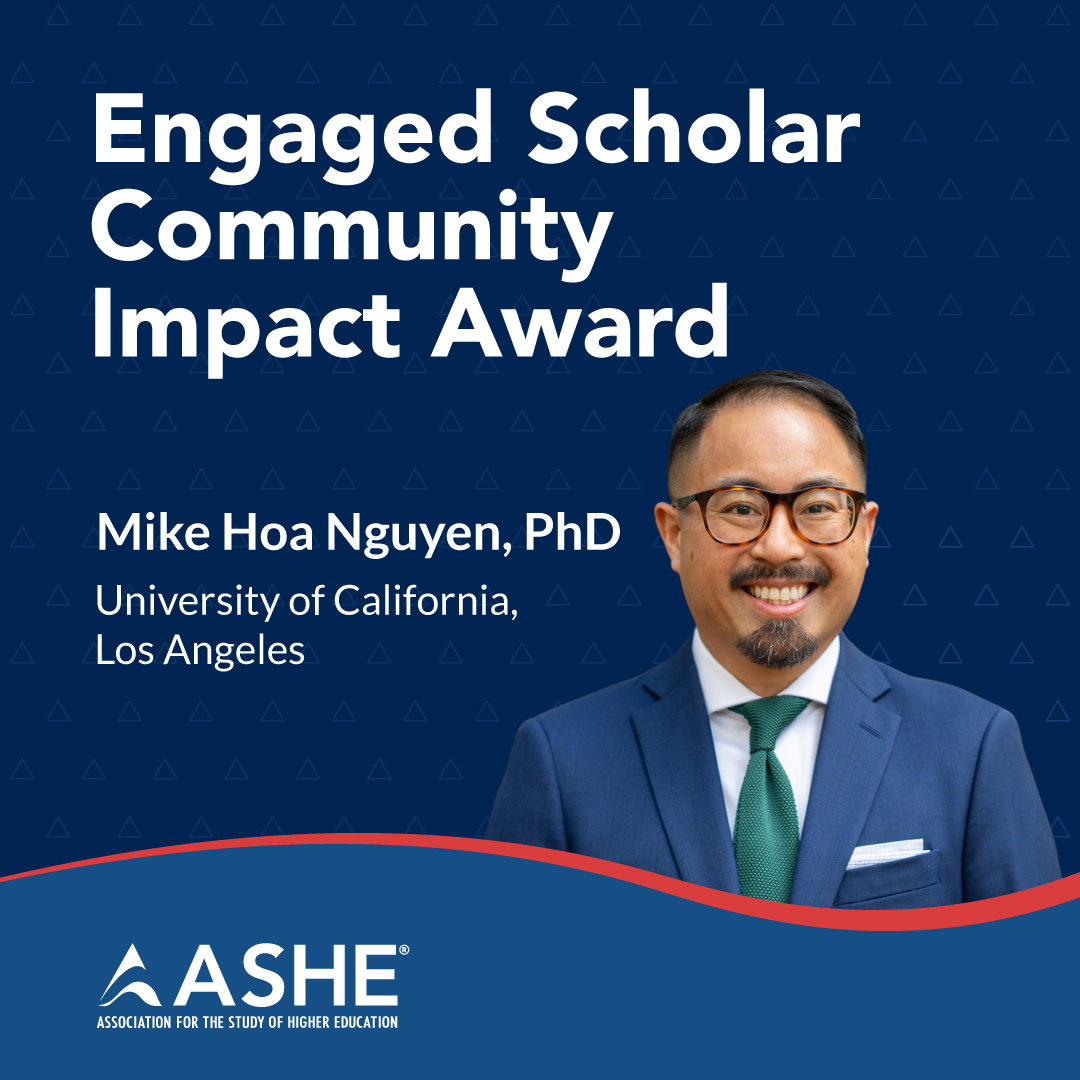 Dr. Mike Hoa Nguyen’s public scholarship advances educational equity through direct policy engagement, legal advocacy, and community coalition building. His research on Minority-Serving Institutions and race-conscious policies has informed federal proclamations, amicus briefs, and curriculum standards. By testifying before legislative bodies, drafting policy language, and serving on national advisory boards, Dr. Nguyen bridges research and civic action to expand funding, shape public policy, and protect opportunities for underrepresented student populations. His impactful work demonstrates how rigorous empirical inquiry can directly safeguard civil rights and guide legislative strategy across evolving political landscapes.
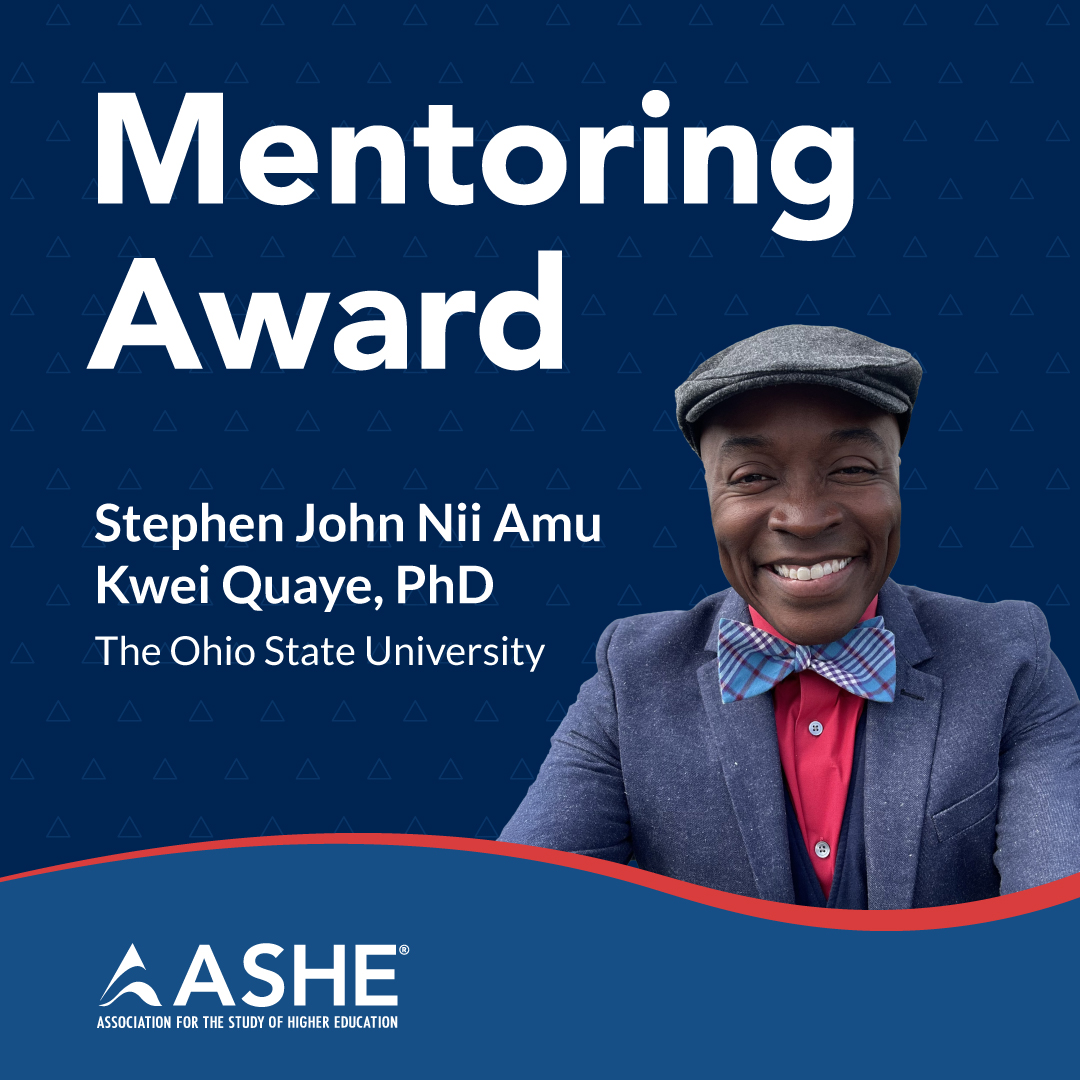 Dr. Stephen Quaye’s mentorship embodies a generative praxis grounded in mutual vulnerability, care, and dialogic engagement. Through a career-long commitment to humanizing academic spaces, he has mentored doctoral students, postdoctoral scholars, and early-career colleagues while modeling how to hold rigorous critique and transformative care together. His leadership through editorial guidance and sustained professional service cultivates networks of generosity and holistic support, leaving an enduring mark on generations of scholars. Dr. Quaye’s relational approach dismantles oppressive institutional hierarchies, establishing transformative environments where scholars thrive intellectually and personally while advancing critical, equity-focused agendas.
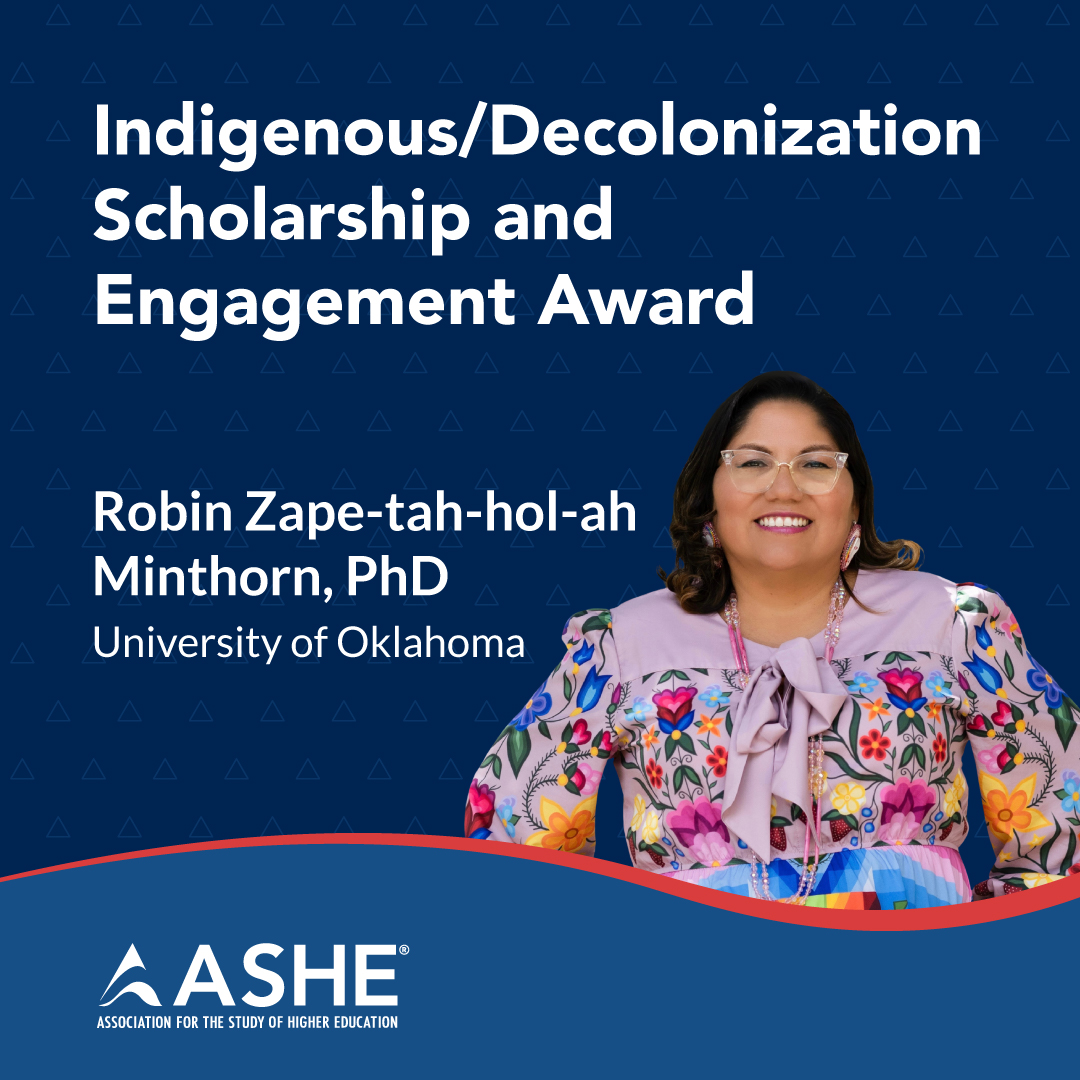 Dr. Robin Zape-tah-hol-ah Minthorn’s scholarship centers on Indigenous leadership, Indigenizing research methodologies, and advancing tribal self-determination across postsecondary education. Her foundational edited volumes establish asset-based, culturally sustaining frameworks that honor ancestral knowledge, relationality, and sovereign educational futures. Beyond her transformative publishing, she actively builds collaborative pathways between academic institutions and Tribal Nations, designs tribally centered graduate programs, and mentors generations of Native scholars. Dr. Minthorn has served in numerous roles through ASHE, including currently serving as first Indigenous President of ASHE.
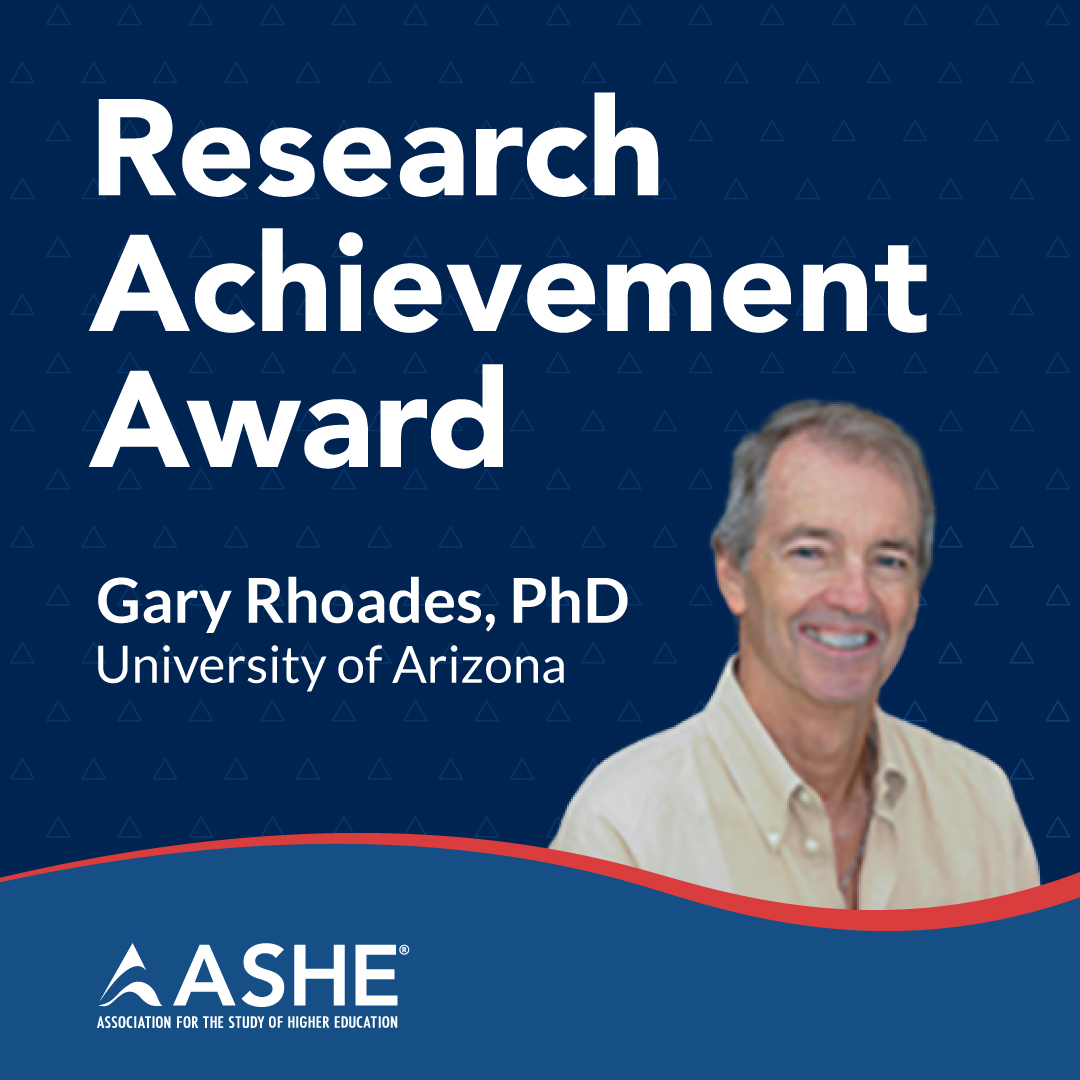 Dr. Gary Rhoades’ scholarship has transformed the study of higher education through field-changing theorizing on academic labor, class inequities, and the influence of neoliberal ideologies on institutional logics. His foundational co-authored work on academic capitalism offers critical frameworks for examining structured economic inequality and organizational power dynamics. By pioneering innovative methodologies analyzing union contracts and labor relations, and translating research into scholar-activism and collective organization, Dr. Rhoades’ scholarship has profoundly shaped research, policy, and practice. His enduring intellectual contributions challenge market-driven institutional models, urging the field to center labor rights and public good commitments. He is a Past President of ASHE.
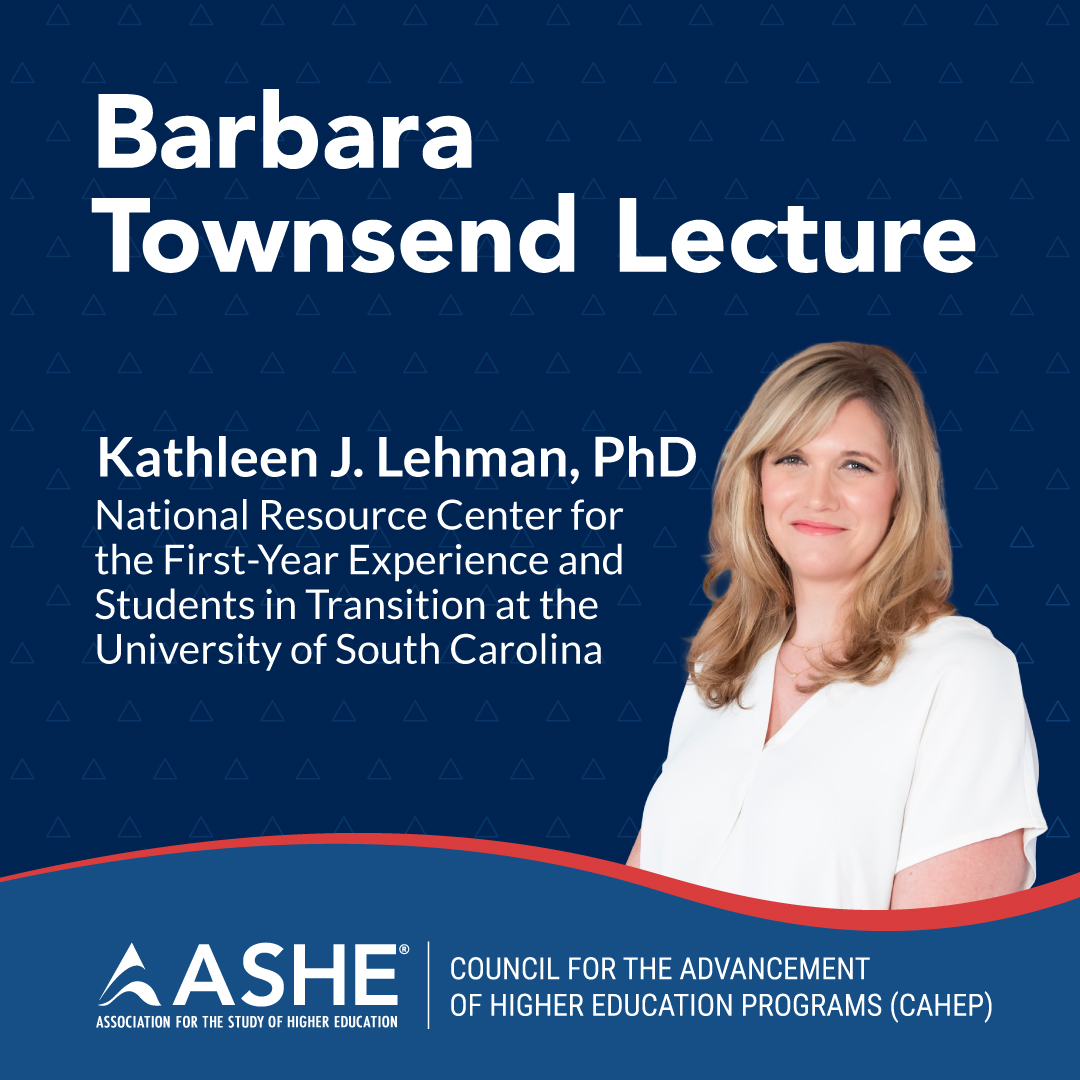 Dr. Kathleen Lehman’s scholarship advances critical understandings of gender, equity, and student engagement in higher education. Her research integrates developmental and structural frameworks to examine how identity, gender role socialization, and institutional culture shape student participation in high-impact educational practices. Beyond her rigorous publications, her leadership of major research centers directly strengthens graduate programs through doctoral mentorship, faculty research support, and curriculum development. Her lecture, "Reframing Engagement: What Gender Reveals About Participation in Higher Education," builds on a decade of active engagement within the ASHE community.
The Barbara Townsend Lecture will be held during the Annual Conference in San Juan.
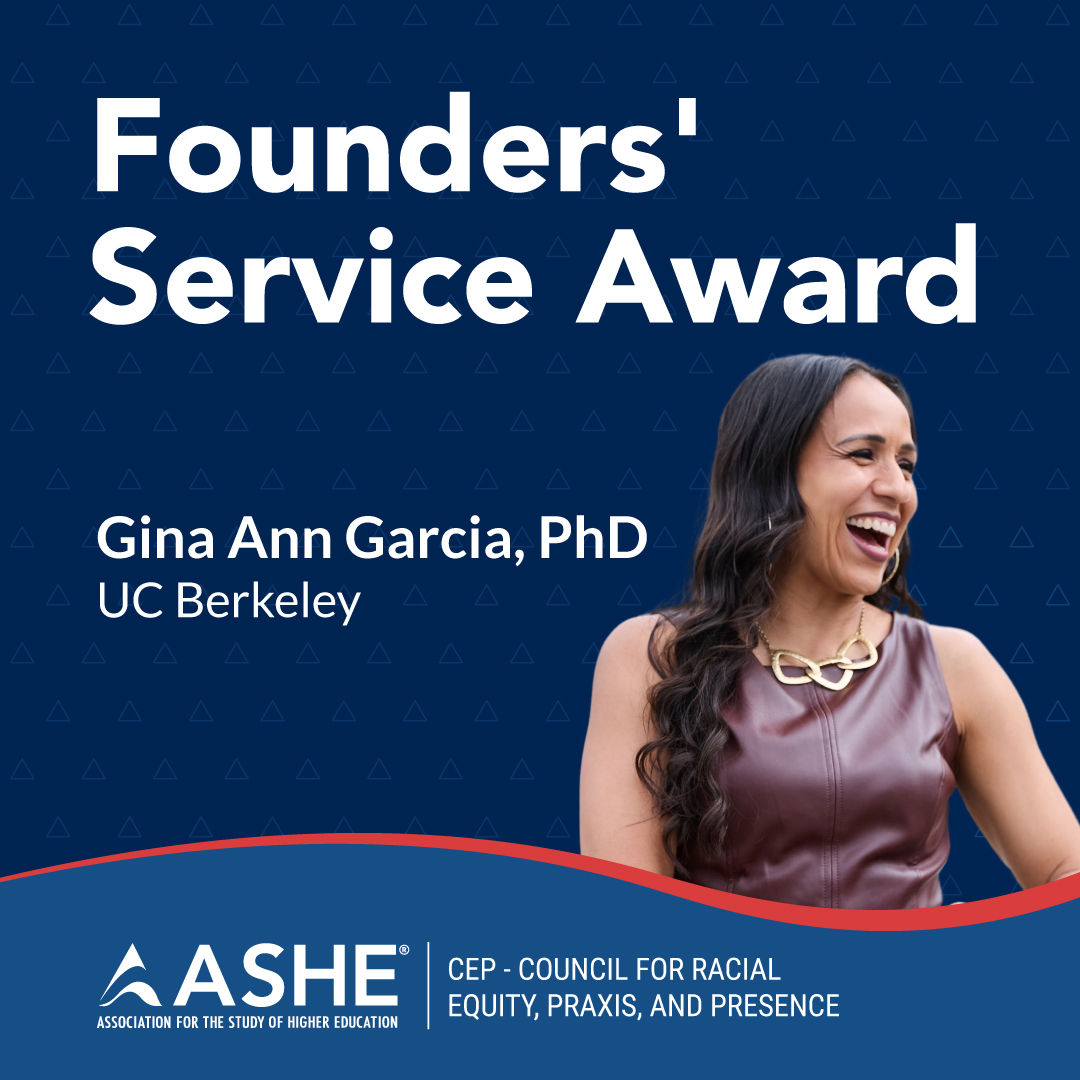 Dr. Gina Ann Garcia’s groundbreaking scholarship on Hispanic-Serving Institutions has fundamentally transformed how higher education defines, assesses, and practices organizational servingness. Centering racial justice, decolonial frameworks, and institutional transformation, her research moves beyond mere enrollment metrics to establish asset-based models that hold broad-access institutions accountable to minoritized students. An influential author, speaker, and public scholar, Dr. Garcia translates critical theory into actionable organizational change while providing extensive mentorship to scholars of color. Her visionary leadership continuously pushes postsecondary systems toward structural equity. She was selected as an Inaugural ASHE Fellow in 2025.
Dr. Garcia will be recognized during the CEP Pre-Conference in San Juan.
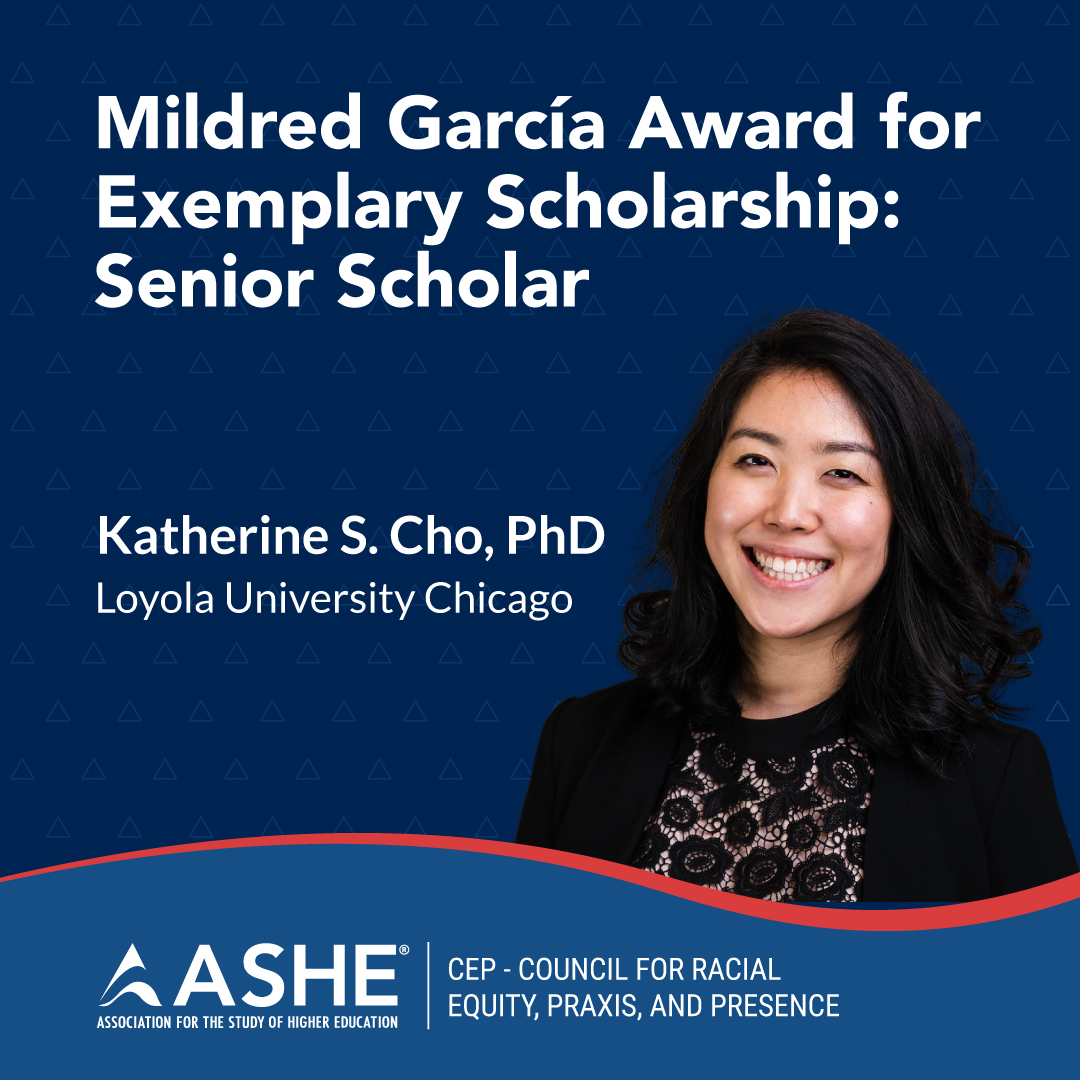 Dr. Katherine S. Cho’s scholarship centers on social justice, activism, and institutional transformation, examining how systemic power dynamics shape higher education and how marginalized students, staff, and faculty navigate academia. Her research illuminates institutional inequities while developing capacities for liberatory practice. Through extensive grant-funded work, prolific publishing, open-access resources that demystify academia's hidden curriculum, and leadership in pre-conference initiatives centered on humanizing academia, she advances equitable postsecondary environments. Dr. Cho previously chaired the CEP Pre-Con and will serve as the 2027 Conference Committee Chair.
Dr. Cho will be recognized during the CEP Pre-Conference in San Juan.
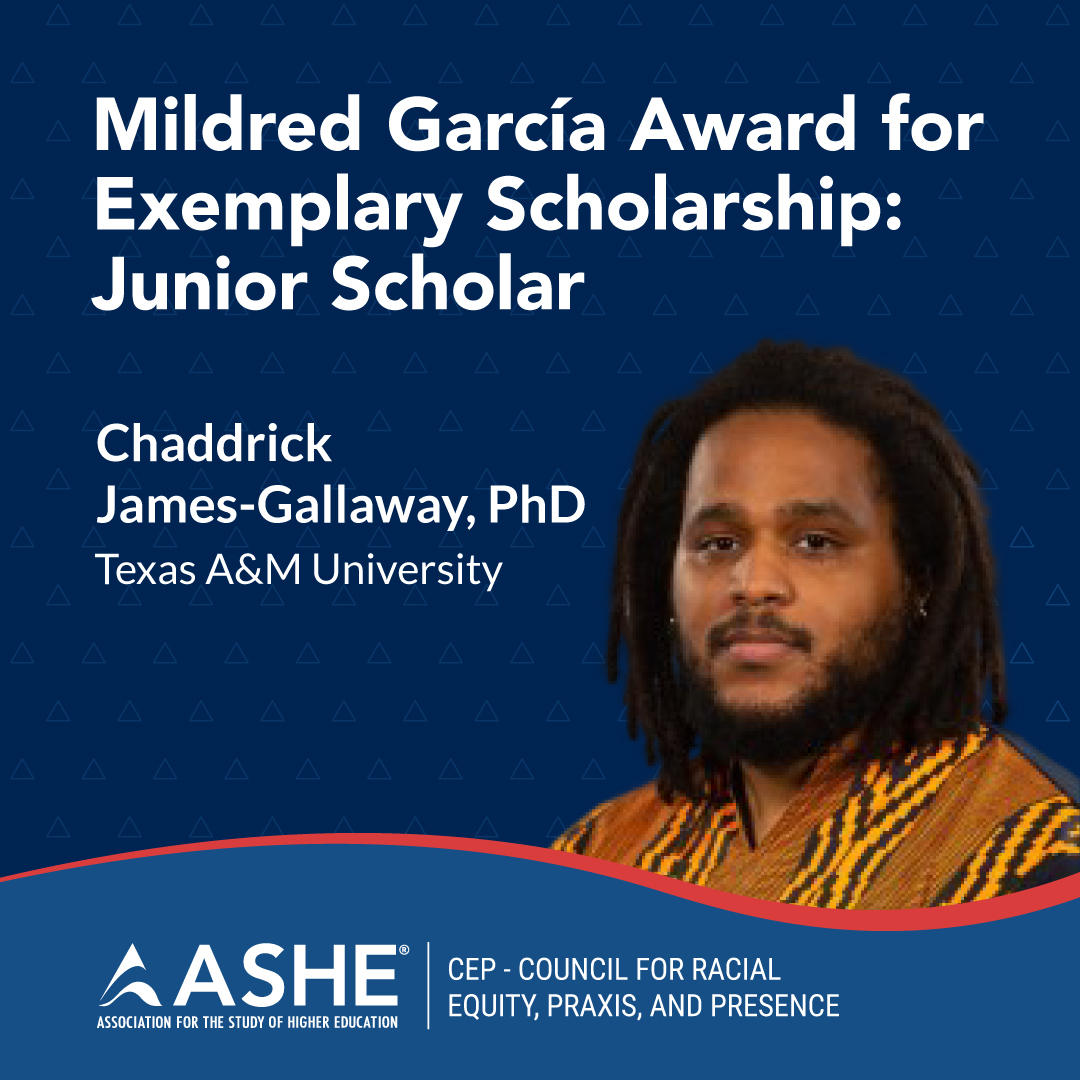 Dr. Chaddrick James-Gallaway’s scholarship examines the racialized experiences of students of color across postsecondary educational contexts, utilizing critical race discourse analysis, intergroup dialogue, and critical racial theories to interrogate institutional cultures and anti-Blackness. His research advances equity by centering underrepresented populations, first-generation college students, and community college pathways. Through extensive publication, national conference presentations, and a deeply embedded mentoring praxis that equips emerging scholars with nuanced epistemological frameworks, Dr. James-Gallaway exemplifies exemplary scholarship and field-building leadership.
Dr. James-Galloway will be recognized during the CEP Pre-Conference in San Juan.
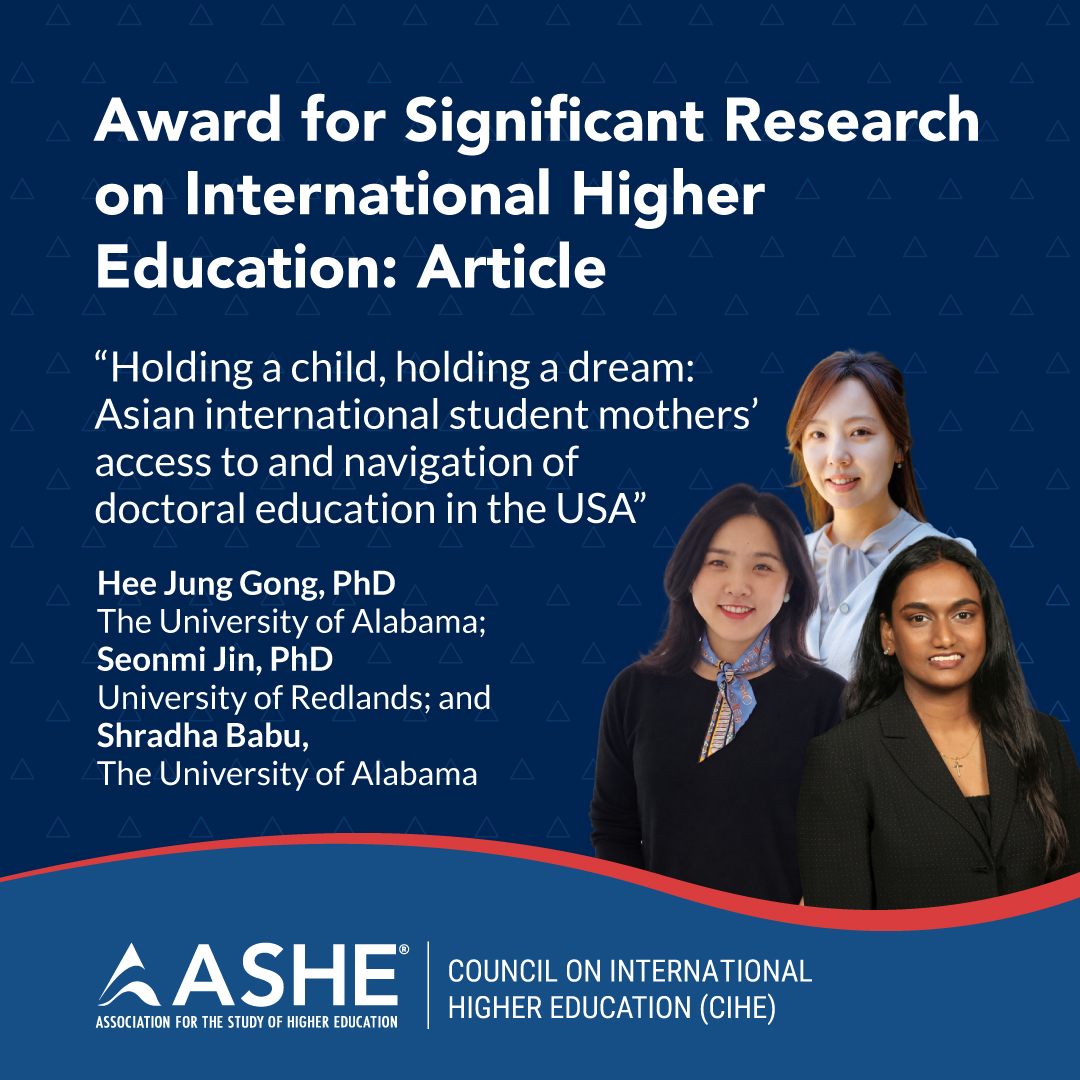 “Holding a child, holding a dream: Asian international student mothers’ access to and navigation of doctoral education in the USA” by Hee Jung Gong, Seonmi Jin, and Shradha Babu provides critical insight into the intersection of parenthood, culture, and academic persistence. By centering historically underrepresented scholars as doctoral education becomes globally connected, the article addresses major gaps in higher education literature. The research offers actionable perspectives on institutional equity, access pathways, and support systems for student-parents. The authors illuminate complex navigational strategies, urging postsecondary institutions to reform policies and build holistic, culturally responsive environments.
The authors will be recognized during the CIHE Pre-Conference in San Juan.
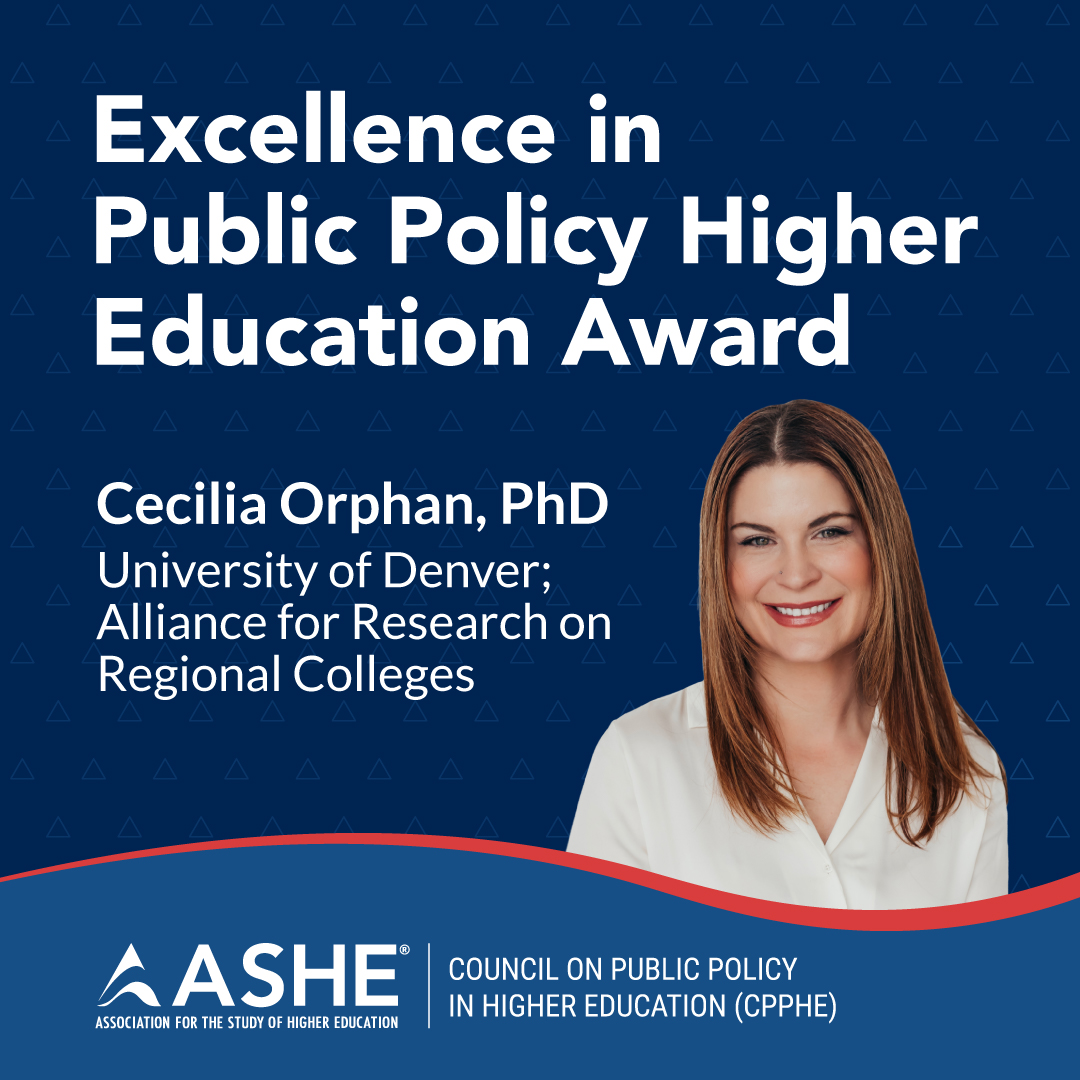 Dr. Cecilia M. Orphan’s scholarship advances evidence-based, equity-focused policy by examining regional public universities, rural-serving institutions, and broad-access higher education. Through extensive research and significant grant funding, her work demonstrates how policy discourses shape institutional funding, access, and societal purpose. As founding co-director of a major research alliance, she translates empirical findings into actionable policy briefs, national media commentary, and strategic recommendations, providing a vital bridge between rigorous research, mentorship, and public policy reform.
Dr. Orphan will be recognized during the CPPHE Pre-Conference in San Juan.
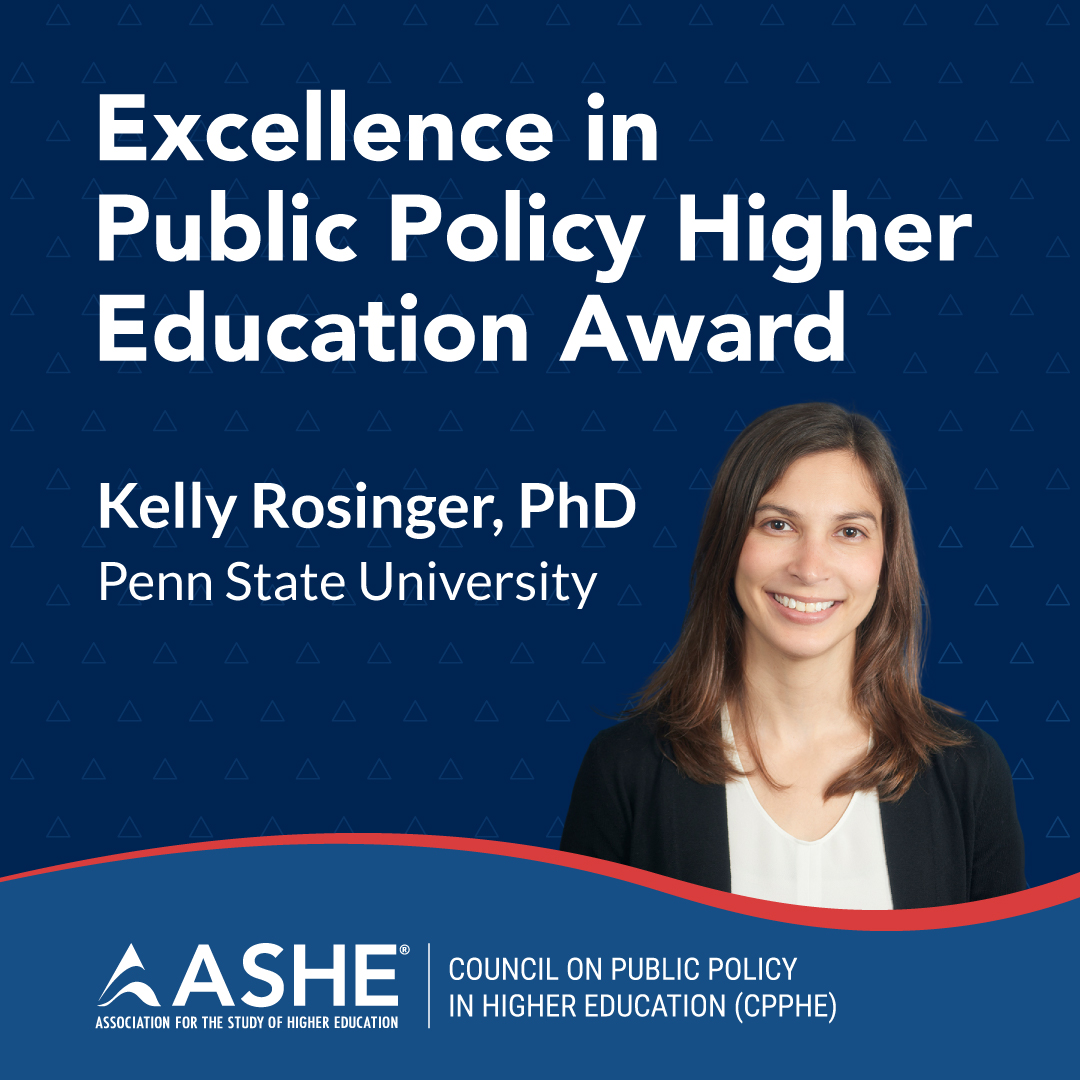 Dr. Kelly Rosinger’s scholarship advances public policy in higher education through rigorous, policy-relevant research on state postsecondary finance and college admissions. As co-founder of major research collaborative initiatives, her work leverages significant external grant funding to examine state higher education policies, performance-based funding, and test-optional admissions practices. Through extensive media engagement, direct collaboration with state and federal policymakers, and a strong commitment to mentoring emerging scholars, Dr. Rosinger effectively bridges empirical research and actionable policy reform.
Dr. Rossinger will be recognized during theCPPHE Pre-Conference in San Juan.