Program Committee
The Program Committee oversees the peer-reviewed portion of the annual conference, managing the Call for Proposals, coordinating peer reviews, ensuring placement of session chairs and discussants, and arranging submissions for the program.
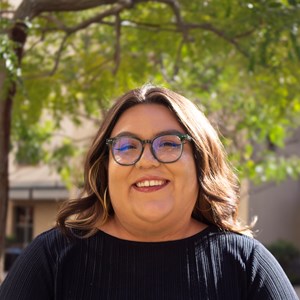
Written by Crystal E. Garcia & Demetri L. Morgan, 2026 Program Committee Co-Chairs
Gil Scott-Heron's 1971 poem "The Revolution Will Not Be Televised" repeats its refrain to satirize the interconnectedness of capitalism, corporations, and the revolutionary forces that spilled into the 1970s from the contentious 1960s. The point: revolution and the status quo are incompatible. Revolution is the upending of norms toward something different—ideally better, more sustainable, and just. Importantly, revolution requires action. It calls for sustained engagement as Scott-Heron asserted, “you will not be able to plug in, turn on and cop out.”
The poem ends unmistakably: the revolution will be live. The systems, structures, curricula, and policies that make higher education what it is are rarely capable of changing themselves. Revolution has to be constructed, earned, and passed on. Fifty-five years after this poem was written, our conference theme invites us, at a perilous moment in the history of higher education, to examine Land, Memory, and Power in ways that enable us to build and sustain collective movements to revolutionize higher education.
As Program Committee Co-Chairs, and on behalf of the Program Committee, we take seriously the invitation from President Robin Zape-tah-hol-ah Minthorn to craft a program that harnesses our collective intellect, theorizing, creativity, praxis, and advocacy toward a meaningful aim: revolution in higher education.
Now, some reading this might think it's not our place as researchers, as scholars, as people in higher education to call for revolution. And it certainly isn't, some may argue, the place for an association to encourage proposals as part of a collective movement. "What if I think higher education needs reform, not revolution?" "What if my research isn't connected to a critique of colonialism or oppression?" "Themes always make lofty calls, but they don't really change anything." These questions and assertions are fair. Revolution is not uniform. It isn't linear. It isn't polite. Revolution is complex, jagged, and unconcerned with academic norms. And what are academic norms anyway at a moment when colleagues are witnessing the degradation of human rights and experiencing the gutting of research grants, limited career prospects, the closing down of programs, and the lingering impact of politically generated public skepticism about higher education?
The same old same old may be working for some in our community, but it isn't working at scale. We can put our heads down and shoulder on individually, or we can choose—you can choose to leverage “the power of collective movements” and embrace: "a healing praxis rooted in critical consciousness [that] recenter[s] marginalized voices and perspectives, moving our scholarly community toward disruption, dismantling, and transformation" (Minthorn and Colleagues, this CFP). What if this conference could be the start of something more healing and generative in higher education scholarship? Are there ways your proposal can contribute to that vision?
As we sound this call for revolution and collective movement in higher education it is important to note, connection to the theme is not a criterion for proposal evaluation or selection (see the review criteria by proposal type for details). Even so, we encourage and challenge ASHE members to consider how your submission helps us meet the moment.
We are grateful to all of the brilliant scholars who have given their time and expertise to support our collective scholarship and path forward as a field and association through their service on the ASHE Program Committee. We look forward to receiving your work through the proposal process and hope to continue to engage our ASHE community in actualizing the conference theme.
Conference Program Committee
-
Alicia Castillo Shrestha
 Director for Conference and Professional Development Association for the Study of Higher EducationStaff Partner
-
Kamia Felise Slaughter
 Assistant Professor of Educational Leadership, Policy, and Law Alabama State UniversitySection Chair
-
Charlotte Davidson
 Director, Native American House University of Illinois Urbana Champaign
-
-
-
-
-
-
Amanda Simpfenderfer
 Assistant Professor for Research Design, Methods, and Analysis William & Mary
-
-
-
-
Shonda Goward
 Interim Associate Vice Chancellor for Student Success California State University
-
-
Lauren M Shook
 Postdoctoral Researcher The University of Texas at El PasoSection Chair
-
-
Luis Antonio Leyva
 Associate Professor of Mathematics Education & STEM Higher Education Vanderbilt University
-
-
-
Paul McNeel GartonAssistant Professor of Educational Leadership & Policy Analysis East Tennessee State University
-
-
-
Tiffani A. Riggers-Piehl
 Associate Professor of Higher Education University of Missouri-Kansas City
-
-
-
Walter Parrish
 Assistant Vice Provost for Faculty Affairs University of Maryland, Baltimore County
-
-
-
-
-
Musbah Shaheen
 Assistant Professor University of Massachusetts at AmherstSection Chair
-
Lindsay Jarratt
 Assistant Professor of Higher Education & Student Affairs Iowa State UniversityCAHEP Pre-Conference Co-Chair
-
-
-
-
-
-
-
-
-
-
-
-
-
-
-
-
-
-
-
-