Attendee Engagement Committee
The Attendee Engagement Committee will develop resources and opportunities for conference attendees to more fully engage with the conference and each other, and serve as ambassadors of the Association for the continuum of first-time attendees to long-time returners to the annual conference.
Written by Natalie Youngbull and LaShawn Faith Washington, 2026 Attendee Engagement Committee Co-Chairs
As we return to Puerto Rico, we recognize that much of the political and educational landscape has shifted. Thus, we ask the ASHE community to contemplate deeply what it means to return to a place that is familiar in unfamiliar times. More specifically, how can we cultivate a sense of belonging for attendees and utilize “collective movements to unsettle colonial narratives” in a place where coloniality is ever present and pervasive. Hence, our goals for the 2026 ASHE’s Attendee Engagement Committee is to help create and find ways to bring people together and to help them feel at home while at the conference, while also acknowledging that we are visitors to Puerto Rico. As visitors, we continue to foster the connections that were built in 2021, and have a deeper understanding of the culture of Puerto Rico, its history, and its people.
This year's theme serves as lens for the ASHE community reflect upon and advance the ways we have come to know, understand, and operate under harmful logics that have marginalized and excluded so many within academia–partciually within the frameworks of Land, Memory and Power.
-
Land: As we return to Borikén, we should be mindful of the relationships and connections cultivated in 2021 and our responsibility as visitors to this place, the people, waterways, and all of creation. Just as the educational and political landscape has shifted, so has the physical landscape of Borikén since 2021. It is important to acknowledge this shift and the ripple effects from this shift. As visitors it is our responsibility to acknowledge what and how the land provides for us, so that we may continue our efforts towards unsettling the higher educational landscape.
-
Memory: Memory is a power tool for solace, courage, and activism. Memory leads to acknowledgment, and acknowledgement can lead us towards gratitude for what was and what currently resides. To recall the past and to live within it, helps us gain a sense of empathy, and urgency to make new memories and reach beyond where we have been. Memory helps us envision where we have yet to go both personally and broadly as a field. Thus, collective approaches to revolutionizing higher education is not just one movement, but a combination of simultaneous movements that hold deep memories and vast liberatory possibilities to dismantle oppressive power structures .
-
Power: Power moves best in silence. It is reified through the everyday seemingly mundane interactions and norms of our discipline and society writ-large. When thinking about power, and our relationships to it, we acknowledge that power is fluid, situational, and multilayered. While power dynamics can seem elusive, it has very real implications for how we come to understand knowledge, coloniality, and the regressive anti-DEI policies and attacks on scholarship centering inclusivity. For those who sit in between the margins of power and privilege, we must seriously reckon with the ways in which power impacts our actions and dispositions towards scholarship, all members of our scholarly community, and residents of Puerto Rico.
As we prepare to head to the Indigenous lands of the Borikén peoples, we also encourage ASHE scholars to consider the following: How can we connect with the local animals and their ecosystems? And how do we connect to the land, water, place, and ways that are not merely performative but meaningful? As stated in previous years, we want to continue to elevate and acknowledge the labor, thought, and care of many of the ASHE scholars who advocate and make diversity, inclusion, equity, and organizational justice a priority in this association. As a scholarly community, we ask you to ruminate on what it means to “actively” engage meaningfully within the ASHE community. Notably, we acknowledge the work of the 2023 ASHE Conference Accessibility Committee and the 2020-2022 CEP Accessibility and Equity/Inclusion Sub-Committee to create the Access (Un)Statement, which can be accessed at www.ashe.ws/disability-justice for your continued engagement and reflection.
Conference Attendee Engagement Committee
-
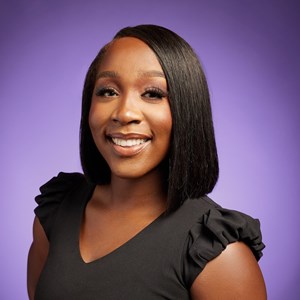
LaShawn Faith Washington
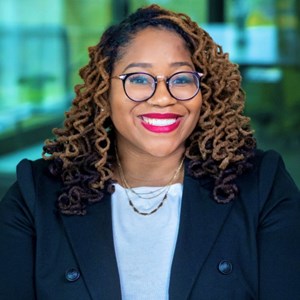 Assistant Professor The University of Texas at AustinCo-Chair
 -
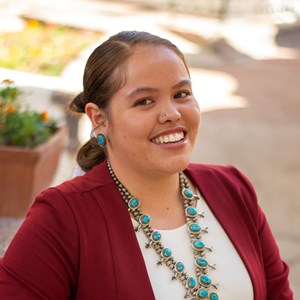
Natalie Rose Youngbull
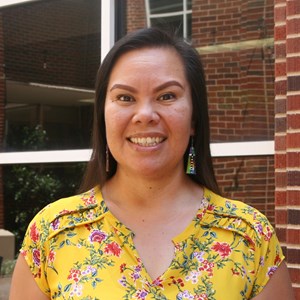 Associate Professor, Adult and Higher Education University of OklahomaCo-Chair
 -
Alicia Castillo Shrestha
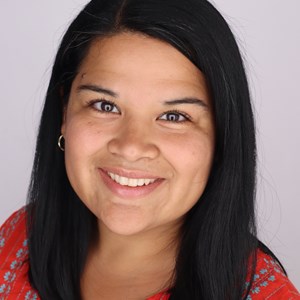 Director for Conference and Professional Development Association for the Study of Higher EducationStaff Partner
 -
-
Ellen ClementsMember and Engagement Development Coordinator University of Louisiana at LafayetteMember
-
-
-
-
Hind Haddad, BA, MA, M.ED, ABD
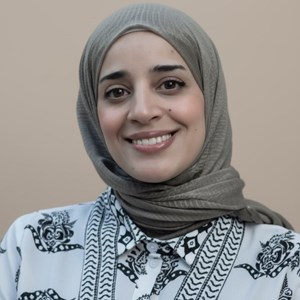 International Program Specialist The Ohio State UniversityMember
 -
Amy Elizabeth Hawley Alvarez, MPhil
 Director of Strategic Partnerships & Part-time Instructor Teachers College, Columbia UniversityMember
 -
-
-
-
Jieun Lee, M.Ed.
 PhD student, Managing Editor of the Journal of Higher Education Outreach and Engagement University of GeorgiaMember
 -
Courtney Luedke
 Associate Professor/ Co-Director, Center for Urban Education Leadership University of Illinois - ChicagoMember
 -
Jordan (Mitchell) Hydeman
 PhD Student and Managing Editor of the Journal of Higher Education Outreach and Engagement University of GeorgiaMember
 -
-
Pam SuzadailAssistant Provost, Online Learning & Professional Education William & MaryMember
-
Jasmine Victor
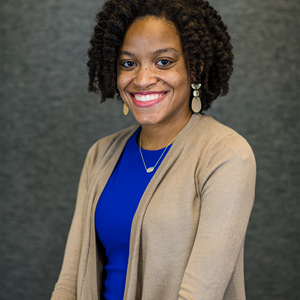 Capacity Building Coordinator & Lecturer The University of Texas at San AntonioMember