

Council on Public Policy in Higher Education (CPPHE)
The Council on Public Policy in Higher Education (CPPHE) provides a collaborative space for researchers, analysts, and policymakers to explore and advance research on public policy issues affecting US higher education.
The ASHE Board of Directors’ decision in October 2002, creating the Council on Public Policy in Higher Education (CPPHE) signaled formal recognition of the need to increase the visibility of research in higher education as a resource to inform public policy-making in postsecondary education. CPPHE’s by-laws state its purpose is to: “Promote research on, and to advance understanding of, the processes and impacts of public policy in U.S. higher education, as well as to help inform decision-making in the public policy arena. The Council shall also serve as an incubator and facilitator of future policy-relevant research and as an ongoing network for the exchange of ideas and information.”
Public policy making in higher education has attracted the attention of some ASHE members virtually since ASHE’s founding as the Association of Professors of Higher Education in the late 1960s. In their Presidential Addresses, Clifton Conrad (1988) and Michael Nettles (1993) urged ASHE members and other higher education researchers to focus on public policy issues as important topics for study, and on the public policy implications of research on other higher education topics. Despite these urgings, efforts in 1993 to form a group that would both stimulate discussion of research and public policy in American higher education and provide a venue for such discussions were unsuccessful.
Patrick Terenzini's* 1995 ASHE Presidential Address* rekindled interest in public policy issues in higher education and recognition of the divide between research in higher education and public policy making, and over the next three years a group coordinated by Terenzini met regularly at ASHE conferences to discuss how to marry research in higher education with public policy making.
Finally, at the 2000 ASHE conference in Sacramento, California, a small coordinating group of ASHE members launched the inaugural Forum on Public Policy in Higher Education, drawing more than 40 proposals for refereed review and attracting more than 70 participants. The group included Carol Everly Floyd, Toni Larson, James Ratcliff, and Patrick Terenzini. Floyd chaired the program committee that year and the next. Ami Zusman succeeded Floyd as program chair in the following two years. Floyd, Larson, Terenzini, and Zusman were joined by Scott Thomas in continuing to guide Forum planning and growth. In 2001 they initiated efforts to secure formal ASHE recognition for research and public policy within ASHE. Floyd led the drafting of bylaws, which culminated in October 2002 with the ASHE Board’s formal creation of the Council. Terenzini chaired the Council’s first nominations and elections committee, which in 2003 put forward a double slate of candidates for an ASHE membership vote. At the ASHE meeting in Portland, Oregon in November of that year, the Council’s first elected officers and executive committee members took office.
Council membership is open to all ASHE members.
*Terenzini, P. T. (1996). "Rediscovering roots: Public policy and higher education research." Review of Higher Education 20: 5-13.
The officers of the Council on Public Policy in Higher Education shall be the Chair, Vice Chair, Immediate Past Chair, and Secretary. These officers and three Members-at-Large shall comprise the Council's Executive Committee. Insofar as practical and possible, members of the Executive Committee shall be of diverse ethnic backgrounds, geographic regions, and genders.
- It shall be the responsibility of the Chair to oversee the various functions of the Council and to report and communicate with the Board of the Association on the needs of the Council, including any necessary budgetary requests. The Chair will call and conduct the annual business meeting of the Council, chair meetings of the Executive Committee of the Council, and make all appointments to Council committees as described in this document.
- The Vice Chair of the Council shall be elected by Council membership and to serve for three years, but not more than two consecutive terms of office. In the first year, the incumbent will serve as Vice Chair. In the second year, the incumbent will serve as Chair of the Council. In the third year, the incumbent will serve as Immediate Past Chair. In consultation with the Chair and Immediate Past Chair, the Vice Chair will prepare the agenda and related materials for the annual meeting of the Council. At the request of the Chair, the Vice Chair will assist on a variety of organizational matters. The Vice Chair will also serve as Program Chair for the annual Public Policy Forum. With assistance from the Immediate Past Chair, the Vice Chair will coordinate the peer review and selection process for sessions at the Council's annual Forum and provide the overall direction and organization for the Forum.
- The Immediate Past Chair will coordinate the Nominations and Elections Process. In addition, the Immediate Past Chair will provide support to the Chair and Vice Chair as needed.
- The Secretary of the Council shall be elected by the Council membership and shall serve a two-year term, but not more than three consecutive terms of office. It is the Secretary's responsibility to record the proceedings at the annual business meeting and prepare communications on Council activities to be submitted to the Council's membership.
- The Executive Committee Members-at-Large shall be elected by Council membership and shall serve a three-year term. In the first election for Member-at-Large seats, terms of one, two, and three years will be filled in order to provide for staggered ending of terms. Executive Committee Members-at-Large provide advice to the Chair and support the Vice Chair in coordinating the Public Policy Forum. They should be prepared to chair ad hoc committees or take on other, short-term assignments as requested by the Chair.
- The terms of office shall begin during the Business Meeting of the ASHE Public Policy Forum, which is held immediately before the ASHE Annual Meeting. If no CPPHE Annual Meeting is held, the terms of office shall begin as close as feasible to the date the terms of office of their predecessors would normally expire, the exact dates to be set by the Executive Committee. If the Chair, another officer, or a Member-at-Large does not take office within one month of the time the term is to begin, the Executive Committee shall declare the given office vacant and appoint a substitute to serve until a successor can be chosen through a regular or special election.
- All officers and members-at-large of the Council shall be elected by written or e-mail ballot of the voting members of the Council. The results of the elections will be announced at the Council's business meeting.
- The Immediate Past Chair will work with the Chair to appoint a Nominating and Election Committee, with the consent of the Executive Committee. The Nominating and Election Committee shall propose nominations and ascertain the availability of nominees for the office of Vice Chair, Secretary and Executive Committee Members-at-Large. The Nominating and Election Committee shall not nominate a member of its committee for any office. The Immediate Past Chair will serve as the Executive Committee’s liaison to the Nominating and Elections Committee.
- The Nominating and Election Committee shall submit to the current Chair and Executive Committee the names of nominees for office, accompanied by evidence of the nominees consent to run. The Immediate Past Chair shall post the report of the Nominating and Election Committee on the Council's website for the membership's information. Voting members may also submit written nominations to the Chair, which shall be signed by not less than five percent of the voting members; members may sign more than one such nomination.
- Persons nominated for a leadership position within the Council should provide information about their professional background in whatever format is requested and be prepared to respond to members' questions about their candidacy.
- The Immediate Past Chair shall arrange for a ballot to be prepared that shall include the names of all duly nominated persons and provided to each voting member of the Council. The person receiving the largest number of votes shall be elected to office. The Nominating and Election Committee shall review the procedures and certify the results to the Chair and Immediate Past Chair immediately, to the members at the following annual meeting, and on the Council's web page. In case of a tie, the election shall be settled by lot. The Nominating and Election Committee will establish the procedure.
- Scheduling of election process activities should, if possible, be held at the same time as the ASHE election process, to maximize participation. The Nominating and Election Committee shall be appointed within two months after the Chair assumes office and shall submit its nominations in conjunction with the ASHE election cycle.
- At least 30 days shall elapse between the mailing (whether by surface mail or e-mail) of election ballots to members and the deadline for their return. The Immediate Past Chair shall arrange for mailing the ballots and set the deadline for their return, which shall generally be consistent with deadlines for ASHE elections.
- The Chair may choose to conduct the elections process in a reasonably fair manner different from that described in 2.2a and b, subject to the approval of the Executive Committee.
- When a vacancy in the office of the Chair occurs, the Council's Executive Committee shall designate an individual whose name shall be submitted to the President of ASHE for appointment for the remainder of the one-year term.
- When a vacancy occurs in any other officer position or in any at-large position, the Chair, with the consent of the Executive Committee, shall appoint an individual to serve out the remainder of the term.
- If the Chair, Vice Chair, Immediate Past Chair, or Secretary is unable or fails to perform duties satisfactorily over a period of time, the Executive Committee shall declare the office vacant and arrange for the duties of the office to be performed. The Executive Committee shall also take other reasonable steps to preserve the offices of the Council on Public Policy in Higher Education intact and to maintain the Council's operations.
- If a Member-at-Large is unable or fails to perform duties satisfactorily over a period of time, the Chair (after consultation with the Executive Committee) shall declare the office vacant and arrange for the duties of the office to be performed.
- Standing Committees may be established or discontinued by the Executive Committee. Standing Committees shall have not less than three members appointed by the Chair, with the advice and consent of the Executive Committee. Appointments normally shall be for three-year terms. The terms shall be staggered such that approximately one-third of the members terms end in any year.
- The Executive Committee shall prescribe the duties of Standing Committees. These duties may be revised from time to time by the Executive Committee.
- Ad hoc committees may be established by the Chair of the Council, after consultation with the Executive Committee, to carry out particular tasks as described in a charge from the Chair. The Chair shall designate the term of the ad hoc committee, which shall not exceed the Chair's term of office.
- Members of ad hoc committees shall be appointed by the Chair of the Council, and the committees shall be discharged at the end of their term or earlier if the tasks assigned are completed or if in the Chair's judgment, they are not making substantial progress toward their purpose.
The Chair shall appoint, with the consent of the Executive Committee, necessary committees for one-year terms. Among them shall be a Nominating and Election Committee, which shall perform the duties specified in Section 2.1 and 2.2 of these procedures.
Items of business requiring the vote of the Council members shall be transacted at the annual business meeting or by mail or e-mail and must originate from the Chair or the Executive Committee in accordance with these Procedures. At least 30 days must elapse between the date on which the proposal is mailed to the members and the date on which a vote is counted. Decision shall be by majority vote.
A summary of actions taken by the membership shall be included in the Annual Report produced by the Chair for the ASHE Board and the Council membership.
The CPPHE Excellence in Public Policy in Higher Education Award is intended to recognize excellence in work at the nexus of academic scholarship and policy practice in the field of public policy and higher education.
Each year, the Chair will appoint an award committee, in close consultation with the executive committee. The award committee will solicit nominations for the CPPHE Excellence in Public Policy in Higher Education Award. Both individuals and organizations will be eligible for nomination. The award committee members, and organizations with which award committee members are affiliated, are not eligible to be nominated during the year in which they serve on the awards committee. Nominations must be received on or before a deadline specified by the award committee. The award committee will select the award recipient each year. The CPPHE Excellence in Public Policy in Higher Education Award should be awarded annually. In June 2013, the ASHE board approved the creation of the CPPHE Excellence in Public Policy in Higher Education Award. The inaugural award was granted during the 2013 Public Policy Forum in St. Louis, MO.
Amendments to or other changes in these Procedures may be initiated in either of the following ways:
- The Executive Committee may formulate proposals and submit them with any arguments it chooses to the members for a vote.
- Five percent of the voting members may submit to the Executive Committee a proposed amendment or amendments in writing, signed by the sponsors. Such a proposed amendment must be submitted 60 days in advance of the business meeting at which action is proposed. The Executive Committee shall then submit the proposed amendment with any arguments by its sponsors and with the Executive Committee's arguments and recommendations for or against the motion to the voting members for action.
CPPHE Pre-Conference
The CPPHE Pre-Conference Forum provides participants the opportunity to explore and discuss significant public policy issues that affect higher education in the U.S. at the local, state, and federal levels. Proposals that emphasize active dialogue and audience participation are particularly welcome. Additionally, CPPHE encourages proposals that bring together researchers and policy actors as partners to help research inform policy. The CPPHE Pre-Conference Forum generally features more applied work than is found in the general conference program.
CIHE Awards
The CPPHE Excellence in Public Policy award recognizes excellence in work at the nexus of academic scholarship and policy practice. In particular, this award focuses on research and/or practice in the policy field that advances the public policy discourse in higher education and/or evidenced-based public policies and equity-focused public policy. Both individuals and organizations are eligible for this award.
CIHE Leadership
Meet the leaders of the Council on Public Policy in Higher Education Programs who are supporting the programs and outreach of the council. Interested in getting more involved with CPPHE? Reach out to the Council Chair for more information about involvement opportunities.
Council on Public Policy in Higher Education (CPPHE) Leadership Team
-
Christopher R. Marsicano
 Associate Professor and Chair, Educational Studies Department; Humphries Director, Martin Institute for Public Good Davidson CollegeChair
 -
-
Eddy Conroy
 Director of Policy and Stakeholder Organizing The Alliance for Higher EducationVice Chair
 -
-
-
-
Leticia Tomas Bustillos
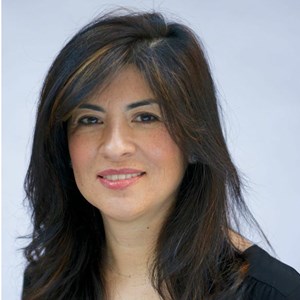 Principal Bella Strategy Group, LLCChair, Nominations Committee
 -
Erin Satterwhite-David
 Assistant Director for Membership Association for the Study of Higher EducationStaff Partner
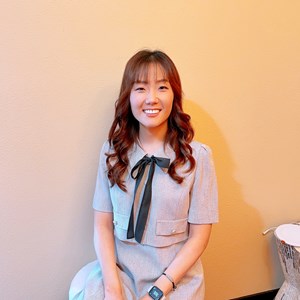


Council on Public Policy in Higher Education (CPPHE) Pre-Conference Committee
-
Eddy Conroy
Director of Policy and Stakeholder Organizing The Alliance for Higher EducationCPPHE Pre-Conference Chair
-
Alicia Castillo Shrestha
 Director for Conference and Professional Development Association for the Study of Higher EducationStaff Partner
Council on Public Policy in Higher Education (CPPHE) Nominations Committee
-
-
Jason P. Guilbeau, PhD, CAE
 Executive Director Association for the Study of Higher EducationStaff Partner
Council on Public Policy in Higher Education (CPPHE) Awards Committee
-
Christopher R. Marsicano
Associate Professor and Chair, Educational Studies Department; Humphries Director, Martin Institute for Public Good Davidson CollegeChair
-
Jason P. Guilbeau, PhD, CAE
Executive Director Association for the Study of Higher EducationStaff Partner
-
-
Eddy Conroy
Director of Policy and Stakeholder Organizing The Alliance for Higher EducationMember